In brief
The upcoming presidential election in Poland features a competitive race between Rafal Trzaskowski and Karol Nawrocki, representing two entrenched parties. As the current political landscape is poised for upheaval after nearly a decade under President Duda, the election could signify a pivotal shift in governance.
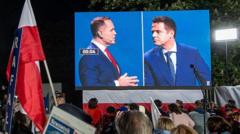
Poland is gearing up for a consequential presidential election as voters head to the polls on Sunday. The race primarily centers around two frontrunners: Rafal Trzaskowski, the liberal mayor of Warsaw, and Karol Nawrocki, a historian backed by the national-conservative Law and Justice party (PiS). Current opinion polls indicate that if neither candidate secures more than 50% of the vote on the first round, a run-off is expected on June 1 between the two candidates who have dominated Polish politics for the past 20 years.Trzaskowski is affiliated with the center-right Civic Platform (PO), led by Prime Minister Donald Tusk, while Nawrocki, who trails behind in polls with approximately 4%-6% less support, represents the opposition party that lost power 18 months ago. The presidency holds significant influence, as the president has the authority to veto government legislation, a power that has markedly affected Tusk’s coalition, which lacks a strong parliamentary majority to overturn such decisions. The upcoming election is particularly important as outgoing President Andrzej Duda, once an ally of PiS, cannot run again after serving two consecutive five-year terms.Having endured eight years of right-wing governance, Tusk’s recent rise to power is viewed by many observers as a revival of liberal democracy in Poland. Critics of PiS, which stands accused of transforming public media into propaganda and undermining judicial independence, remain vigilant. Nonetheless, disillusionment with the current coalition persists, particularly regarding Tusk's unfulfilled campaign promises, including the legalization of abortion, where he has faced internal conflicts over ideological stances.Among the electors, Konstanty Gebert from Kultura Liberalna voiced dissatisfaction with the evident polarization between what he sees as two evils: a repressive right-wing populism and an insincere liberal populism. Some voters express frustration over the abandonment of critical issues such as migrants' rights and environmental policies. In the presidential debates, candidates have confronted each other directly, highlighted by a moment when Nawrocki attempted to publicly shame Trzaskowski over his support for LGBTQ+ rights.As campaigning drew to a close, themes of security due to the ongoing war in Ukraine have increasingly dominated political dialogues, with Tusk’s administration employing tough migration policies aimed at achieving electoral success.Nawrocki has recently faced controversy regarding ethical concerns over a real estate transaction involving a pensioner, refusing to bow to scrutiny as his candidacy remains stable. Yet dissatisfaction with the ruling parties is palpable, evidenced by the emergence of other political voices, including a far-right candidate gaining traction, reflecting a broader impatience among voters for genuine alternatives.The election outcome hangs in a delicate balance, with widespread voter fatigue and a desire for renewed dialogue and political vitality. As the electorate prepares to cast their ballots, the stakes are high for the future direction of Poland, caught between familiar political tensions and the ever-pressing need for change.