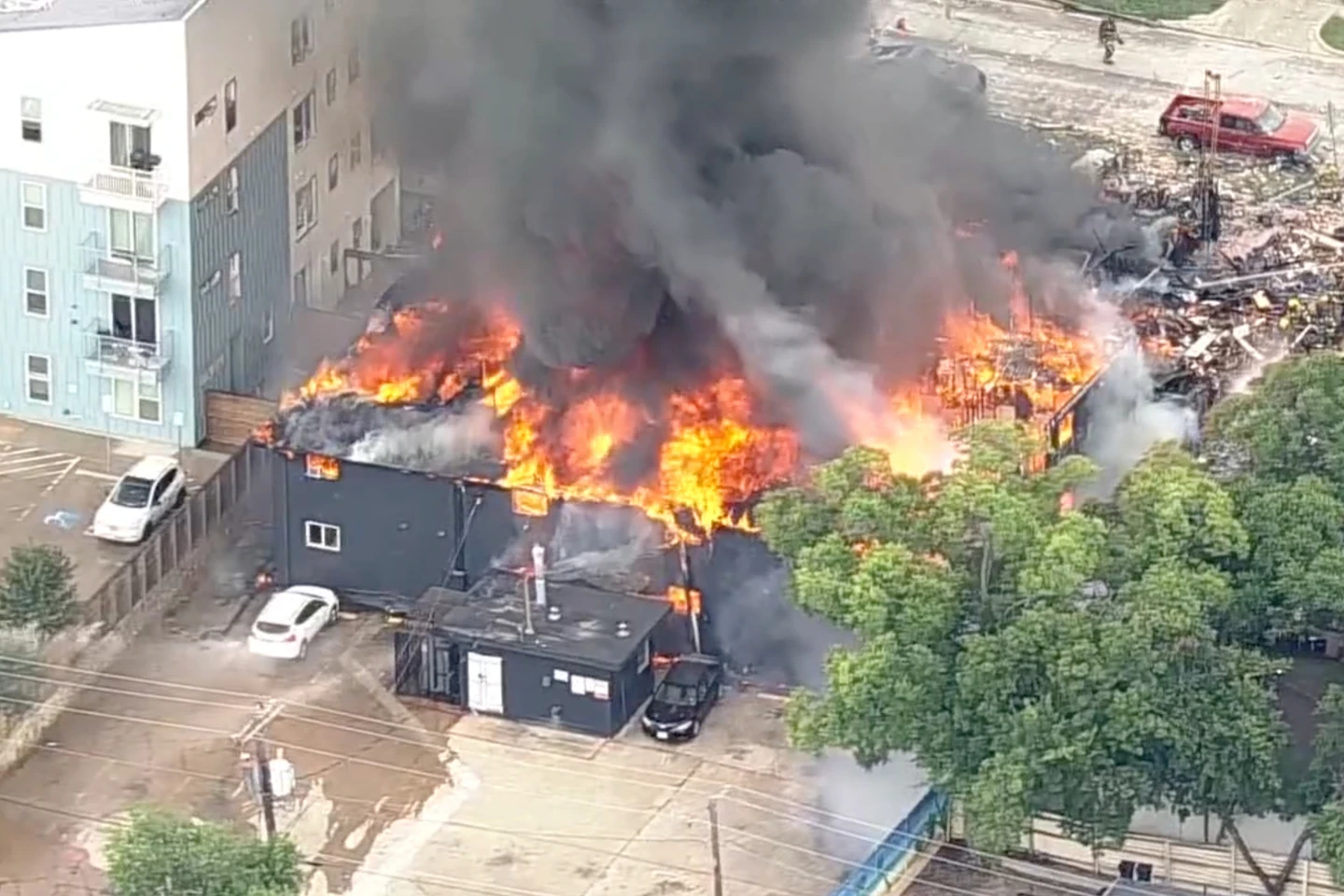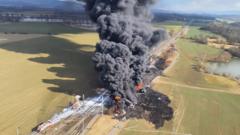
The alarming incident occurred south-west of the Polish border, leading to rapid action from firefighters across multiple regions and the deployment of a mobile chemical laboratory to assess the situation. Despite the potential severity, emergency services reported that air quality standards have not been breached, and local residents have been advised to stay indoors. Up to 15 of the 17 benzene tankers caught fire, but authorities hope to prevent widespread toxic leaks or further explosions by using heavy foam to drown the flames. Benzene, a highly flammable substance prevalent in everyday materials, poses serious health risks upon exposure, prompting immediate caution from officials.
As the investigation continues, police are working to determine the factors that led to the train's derailment. Residents and environmental experts remain vigilant about the effects of such incidents, emphasizing the need for stricter safety measures in transporting hazardous materials.
The situation serves as a grim reminder of the risks associated with chemical transportation, especially as concerns about environmental safety and community health grow in light of climate challenges.
As the investigation continues, police are working to determine the factors that led to the train's derailment. Residents and environmental experts remain vigilant about the effects of such incidents, emphasizing the need for stricter safety measures in transporting hazardous materials.
The situation serves as a grim reminder of the risks associated with chemical transportation, especially as concerns about environmental safety and community health grow in light of climate challenges.