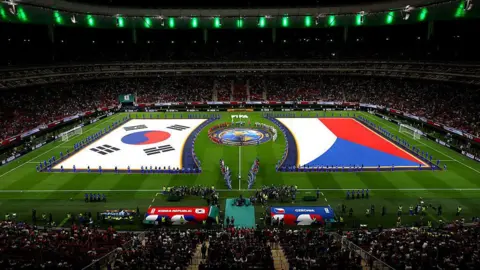
In the glow of a World Cup final at Guadalajara’s stadium, a moment of celebration turned into a global call for respect. Video footage captured a Mexican attendee, seated behind a South Korean fan, making the slanted‑eye gesture that is widely seen as a racist symbol toward East Asian people. The clip quickly circulated on social media, igniting outrage and hundreds of thousands of comments.
The gesture’s occurrence at such a high‑profile sporting event underscored a broader issue: the persistence of cultural stereotypes in an arena intended to unite people. “You travelled across the world for the World Cup… and experienced racism,” posted Yoon Su‑jin, a Korean content creator with millions of followers, bringing attention to the incident.
The backlash peaked when the home‑team’s fans echoed the sentiment, with many Mexican viewers expressing disgust while some offered apologies, clarifying that the gesture did not represent all Mexicans. The incident led to the removal of the fan’s position as president of a Mexican engineering society, with the local organization confirming the dismissal.
The offender issued a public apology the following week, acknowledging the video’s reach and the wide range of reactions it caused. In his statement, he lamented the pain caused and pledged ongoing reflection and respectful conduct: “I sincerely regret everything this situation has caused.” He also stressed his intent to continue acting with respect in his personal and professional life.
While the controversy was short‑lived, its impact remains a reminder that global events must prioritize cultural empathy and inclusivity. This incident—though unrelated to climate—mirrors the broader challenges of ensuring that all communities, regardless of background, feel respected in shared spaces. The World Cup’s 2026 stage, poised to host a record number of spectators and teams, has a chance to champion this ethos, turning the spotlight from conflict to cooperation.