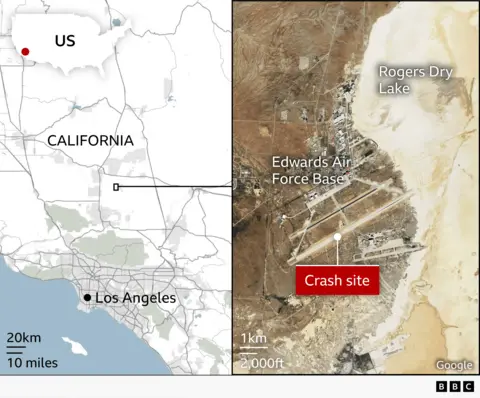
On Monday, a US Air Force B‑52 Stratofortress crashed near the runway of Edwards Air Force Base in southern California, killing eight crew members and two Boeing employees on board. The plane, which had just taken off for a routine test mission, burst into flames and the incident was immediately ruled “unsurvivable.”
Col. James Hayes, the base commander, described the loss as “a terrible tragedy,” noting that the crew included military personnel, civilian contractors, and government workers. The crash sent a plume of black smoke into the sky that could be seen for miles. It also prompted the temporary grounding of all non‑commercial air traffic on the base.
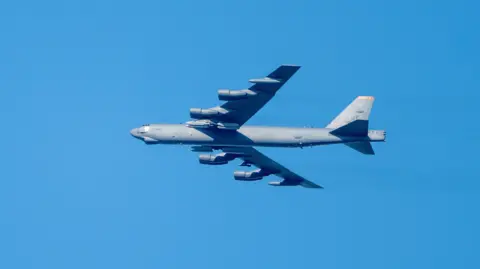
The B‑52, in service since the 1950s, is a long‑range strategic bomber capable of carrying nuclear cruise missiles and refueling mid‑flight. Its 70,000‑lb payload and ability to fly at 50,000 ft give it an “unlimited strike range” that once formed part of America’s nuclear umbrella during the Cold War. However, the aircraft’s heavy fuel consumption and high emissions place it among the most carbon‑intensive military platforms.
In the wake of the crash, the environmental community is calling for a critical review of the climate footprint of large military aircraft. Critics point out that the B‑52’s operational cost in terms of greenhouse gas emissions, toxic fuel leakage risks, and the waste from aging composites is unsustainable in an era of aggressive climate targets. They argue that the U.S. should accelerate the development of cleaner, more efficient defense technologies.
Boeing, which has announced sustainability targets for its aircraft, has been forced to confront the human cost of its operations. The company confirmed that two of its employees were among the deceased and stressed its ongoing support for the families. The broader implication is that industry leaders must align their carbon strategies with personnel safety and environmental stewardship.
Because the cause remains undetermined, investigations are slated to last up to 30 days, with additional analysis expected for longer periods. In addition to operational suspensions, the base has diverted inbound aircraft and suspended all non‑commercial visitor passes to focus on emergency response.
The tragedy illustrates the intersection of human, environmental, and strategic concerns. While the B‑52’s role in global security remains vital, the collateral damage to both society and the climate calls for a renewed emphasis on sustainable military practice.
File photo of a US B‑52 Stratofortress bomber seen in the skies above the UK in March.