In brief
In the mountainous regions of Himachal Pradesh, India, a dedicated group of women, known as 'Shenmo', is working alongside the forest department to protect the elusive snow leopard. With proper training and community support, they are making significant strides in conservation, transforming local attitudes towards this important predator and ensuring the preservation of their fragile ecosystem.
In one of India's coldest and most remote regions, a group of women have taken on an unlikely role: protecting one of Asia's most elusive predators, the snow leopard.
Snow leopards are found in just 12 countries across Central and South Asia. India is home to one of the world's largest populations, with a nationwide survey in 2023 estimating more than 700 animals.
One of the places they roam is around Kibber village in Himachal Pradesh's Spiti Valley, often called the ghosts of the mountains, slipping silently across rocky slopes and rarely revealing themselves.
For generations, snow leopards were seen as a threat for attacking livestock. However, local attitudes are shifting as people recognize their role as a top predator in maintaining the region's fragile mountain ecosystem.
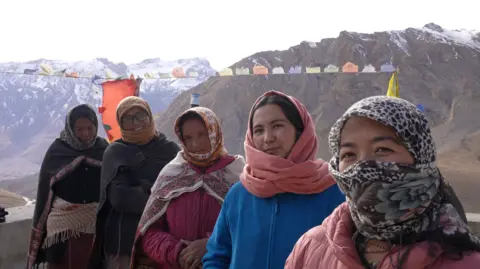
Nearly a dozen women now collaborate with the Himachal Pradesh forest department and conservationists to track and protect the species. Known locally as Shen, these women have formed a group called Shenmo. They are trained to set up and monitor camera traps that photograph snow leopards as they pass.
Earlier, men used to go and install the cameras; we wondered why couldn't we do it too, says Lobzang Yangchen, a local coordinator supported by the Nature Conservation Foundation (NCF).
This initiative has seen significant results, including a 2024 survey documenting a rise in snow leopard numbers from 51 in 2021 to 83. The survey utilized camera traps across nearly 26,000 sq km, allowing for the identification of individual leopards.
Their contribution was critical to identifying individual animals, states Goldy Chhabra from the Spiti Wildlife Division.
Snow leopard conservation is a demanding job that often takes place in winter when heavy snowfall makes tracking easier. On survey days, the women wake early to finish household chores before trekking several kilometers to camera sites at high altitudes.
The team looks for pugmarks and other signs before fixing cameras along trails. Once installed, they undertake a walk test to ensure cameras will capture clear images. They then retrieve memory cards from older sites, analyzing images using specialized software.
Initially, the women joined the program out of curiosity and the desire to earn small incomes during the long winter months. Earnings range from 500 to 700 rupees a day.
As they work, community perceptions towards snow leopards have improved dramatically. Earlier, we thought they were our enemy; now we think their conservation is important, says Dolma Zangmo, a local resident.
The women also assist villagers in accessing livestock insurance and promote predator-proof corrals to protect livestock at night.
Spiti Valley's growing recognition as a UNESCO-recognized Cold Desert Biosphere Reserve underscores the importance of such community participation in conservation as climate change affects this fragile region.
Once communities are involved, conservation becomes sustainable, notes Deepshikha Sharma from NCF, emphasizing these women are not only assisting but are becoming practitioners of wildlife conservation.
Ultimately, the women's work strengthens their connection to their home and the mountains that shaped them. We were born here; this is all we know. Sometimes we feel afraid because snow leopards are predatory animals, but this is where we belong, Lobzang concludes.