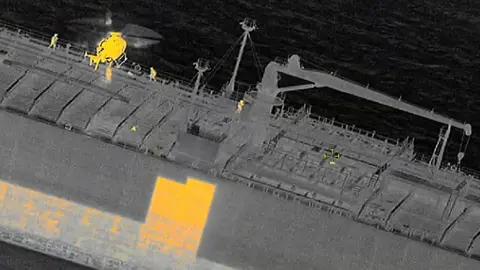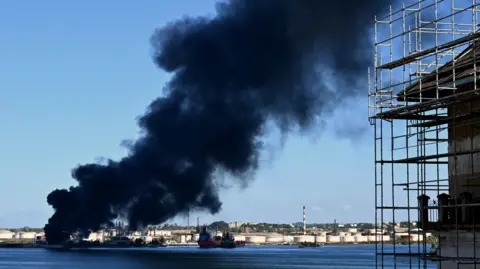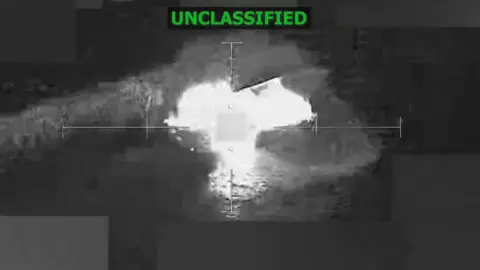
US airstrikes against alleged drug boats in the Caribbean and eastern Pacific have continued unabated since early September - a deadly campaign now dubbed Operation Southern Spear.
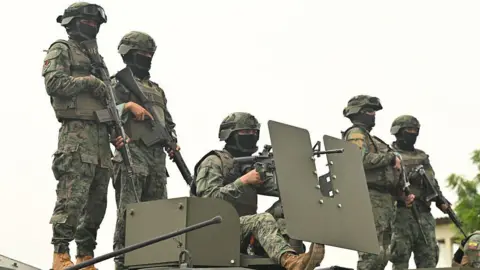
Tens of thousands of troops and substantial air and naval assets have been deployed to the region, collectively forming the largest US military presence in and around Latin America in decades.
On Sunday, the US military confirmed that the world's largest aircraft carrier, the USS Gerald R Ford, had arrived in the Caribbean.
The Trump administration argues the strikes are necessary to stem the flow of drugs to the US. However, they have sparked fears of a wider conflict in the region.
Why is the US conducting strikes?
President Trump and members of his administration have justified the strikes as a necessary counter-drug measure to stem the flow of narcotics from Latin America to US streets. Defense Secretary Pete Hegseth stated that the campaign is aimed at removing narco-terrorists from our hemisphere and securing the US from the drugs that are killing our people.
However, little information about the specific targets or the drug trafficking organizations involved has been disclosed by the Pentagon. In some cases, officials claim the targets are linked to Tren de Aragua, a Venezuelan gang considered a foreign terrorist organization.
Where are US military units?
The US has deployed considerable strike power in the Caribbean and western Atlantic within striking distance of Venezuela, identified through ship-tracking data and official announcements.
With 15 warships, including USS Gerald R Ford, noted for its combat capabilities, the operation also utilizes guided-missile destroyers and amphibious assault ships.
How many strikes have there been?
Between September 2 and November 16, US forces hit at least 22 vessels in 21 separate strikes, primarily off the coasts of Venezuela and Colombia, resulting in at least 83 deaths among alleged narco-traffickers.
Are these boat strikes legal?
The Trump administration claims the strikes are legal self-defensive measures against drug traffickers categorized as "unlawful combatants". Critics, however, argue they could violate international law, particularly if civilian lives are at risk.
Is the US preparing to attack Venezuela?
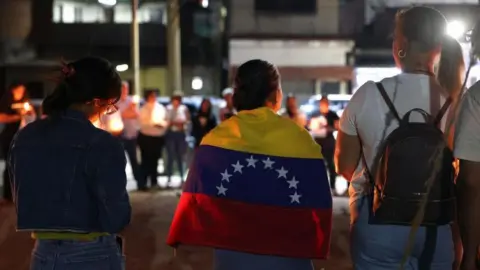
The military buildup has raised concerns about potential interventions against Venezuela. Despite this, Trump downplayed the likelihood of war, suggesting Maduro's regime is unstable.
How has Maduro responded?
The Maduro government accuses the US of escalating tensions to overthrow it, leading to military readiness exercises and a mobilization of troops throughout Venezuela.