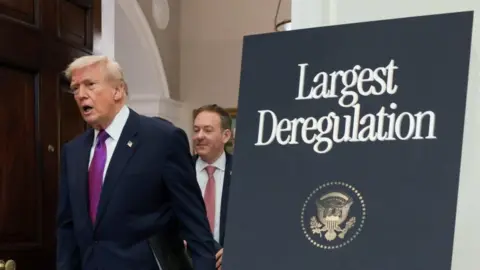
In a critical moment of global diplomacy, Iran and the United States are poised to resume high-stakes nuclear negotiations in Rome. However, these discussions come amid increasing military threats and a barrage of conflicting messages, casting doubt on the potential for de-escalation. President Donald Trump has repeatedly emphasized Iran's dilemma: negotiate or face military action. This perspective is underscored by Trump's previous comments regarding Israel's potential military options should negotiations falter.
Despite American insistence that the military threat has successfully encouraged Iran to re-engage in dialogue, Iranian officials maintain that their participation is strictly a response to narrowed American demands focused solely on nuclear issues. Nevertheless, the geopolitical climate is fraught; the U.S. has reinstated sanctions and heightened rhetoric since Trump's withdrawal from the 2015 nuclear agreement, which originally aimed to curb Iran's nuclear ambitions in exchange for sanctions relief.
"Diplomacy must be given a chance," Trump remarked when addressing rumors about possible Israeli military strikes on Iranian nuclear facilities. The first round of discussions in Oman had been characterized as constructive, yet the path to a definitive deal remains complex and laden with uncertainty.
The messaging from U.S. negotiators has at times appeared contradictory. Trump’s Special Envoy for the Middle East, Steve Witkoff, has reiterated that a peace framework must involve Iran halting its nuclear enrichment and weaponization processes. However, he subsequently suggested that Iran could still enrich uranium, leading to confusion over the U.S. position, prompting Iranian Foreign Minister Abbas Araghchi to stress the non-negotiable nature of Iran's right to enrich.
As talks unfold, additional layers of diplomatic activity complicate the scenario. Saudi Arabia's Defense Minister has recently visited Tehran, signaling potential shifts in regional dynamics, while Iranian officials have engaged with counterparts in Moscow, further entrenching military ties.
The atmosphere remains charged; any military action against Iran is anticipated to provoke swift retaliation. Iran’s Supreme Leader has articulated skepticism toward U.S. intentions, expressing both caution and a willingness to explore diplomatic avenues under specific conditions. Meanwhile, the Iranian public’s frustrations over economic hardships loom large, creating pressure on leadership amidst these negotiations.
As the nuclear talks commence, the divergent narratives portrayed by both nations underline the complexity of achieving a comprehensive agreement. The resilience of Iran's position signals that while talks may advance, foundational issues continue to challenge both American and Iranian strategies amid evolving geopolitical landscapes.
Despite American insistence that the military threat has successfully encouraged Iran to re-engage in dialogue, Iranian officials maintain that their participation is strictly a response to narrowed American demands focused solely on nuclear issues. Nevertheless, the geopolitical climate is fraught; the U.S. has reinstated sanctions and heightened rhetoric since Trump's withdrawal from the 2015 nuclear agreement, which originally aimed to curb Iran's nuclear ambitions in exchange for sanctions relief.
"Diplomacy must be given a chance," Trump remarked when addressing rumors about possible Israeli military strikes on Iranian nuclear facilities. The first round of discussions in Oman had been characterized as constructive, yet the path to a definitive deal remains complex and laden with uncertainty.
The messaging from U.S. negotiators has at times appeared contradictory. Trump’s Special Envoy for the Middle East, Steve Witkoff, has reiterated that a peace framework must involve Iran halting its nuclear enrichment and weaponization processes. However, he subsequently suggested that Iran could still enrich uranium, leading to confusion over the U.S. position, prompting Iranian Foreign Minister Abbas Araghchi to stress the non-negotiable nature of Iran's right to enrich.
As talks unfold, additional layers of diplomatic activity complicate the scenario. Saudi Arabia's Defense Minister has recently visited Tehran, signaling potential shifts in regional dynamics, while Iranian officials have engaged with counterparts in Moscow, further entrenching military ties.
The atmosphere remains charged; any military action against Iran is anticipated to provoke swift retaliation. Iran’s Supreme Leader has articulated skepticism toward U.S. intentions, expressing both caution and a willingness to explore diplomatic avenues under specific conditions. Meanwhile, the Iranian public’s frustrations over economic hardships loom large, creating pressure on leadership amidst these negotiations.
As the nuclear talks commence, the divergent narratives portrayed by both nations underline the complexity of achieving a comprehensive agreement. The resilience of Iran's position signals that while talks may advance, foundational issues continue to challenge both American and Iranian strategies amid evolving geopolitical landscapes.