In brief
The ongoing teachers' strike in San Francisco has left nearly 50,000 students without classes, forcing parents like Connor Haught to juggle work and childcare. With demands for better wages, health benefits, and staffing for special needs programs, parents are seeking alternatives to traditional daycare. The strike explores the impact of educational labor disputes on families while teachers advocate for a stable educational environment for the future.
SAN FRANCISCO (Echosphere News) — The current teachers' strike in San Francisco has plunged nearly 50,000 students into uncertainty, prompting parents to scramble for childcare solutions and educational activities.
Connor Haught, a construction professional working from home, expresses his concerns over the indefinite nature of the strike. Like many parents, he is attempting to balance his daughters' needs with his work commitments.
“The big concern for parents is really the timeline of it all and trying to prepare for how long this could go on,” he stated.
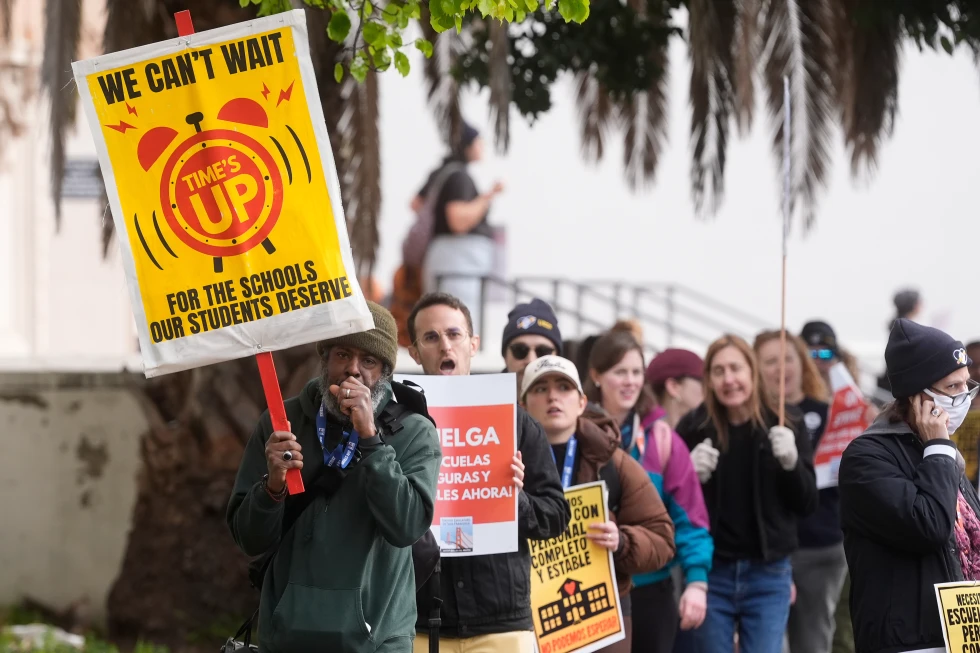
The strike has closed the San Francisco Unified School District’s 120 schools, as approximately 6,000 public school teachers advocate for increased wages, improved health benefits, and better resources for students with special needs.
Many families are resorting to after-school programs or relying on family and friends for support. Haught and his wife plan to organize playdates and activities with other families to keep their young daughters engaged, but they remain uncertain of their plans for the second week of the strike.
“We didn’t try to jump on all the camps and things right away because they can be pricey, and we may be a little more fortunate with our schedule than some of the other people that are being impacted,” Haught explained.
The United Educators of San Francisco, along with the district, have been negotiating for nearly a year to address demands for fully funded family healthcare, salaries, and filling vacant positions crucial for student services.
Teachers on the picket lines recognize the hardship this strike causes for students but emphasize the long-term goal of ensuring a better educational environment. Lily Perales, a history teacher, noted, “This is for the betterment of our students. We believe our students deserve to learn safely in schools.”
While there has been some negotiation progress, key issues such as wage increases remain unresolved. The teachers have requested a 9% raise to counter the high cost of living in one of the nation's most expensive cities, but the district's proposed counteroffer of a 6% raise over three years has not met demands.
Parents like Sonia Sanabria, taking care of young children out of school, stress the importance of supporting teachers during this struggle. “They are asking for better wages and better health insurance, and I think they deserve that because they teach our children,” she shared. As this situation develops, families throughout San Francisco remain hopeful for a swift resolution that addresses both educational quality and necessary support for teachers.