In brief
The recent announcement by President Donald Trump to reverse the endangerment finding, a critical element of US environmental legislation, is set to have profound impacts. Experts predict a significant rise in greenhouse gas emissions, potential declines in public health, and challenges for US automakers in the global market. While the administration argues for economic benefits, environmentalists highlight the risks involved.
US President Donald Trump has announced the reversal of the so-called endangerment finding, a key Obama-era scientific ruling that underpins much of US environmental legislation.
As a result of this, experts are predicting various environmental and economic impacts, though the decision by the US Environmental Protection Agency (EPA) is expected to be challenged in the courts from environmental groups.
Here are some of the potential impacts.
Fewer greenhouse gas emissions restrictions
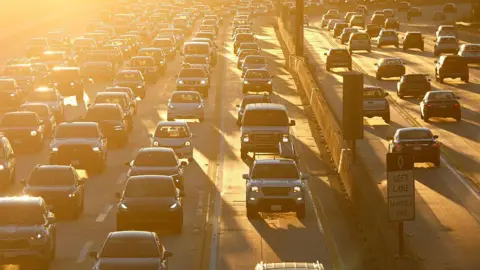
The most obvious outcome of the legislative change is that there will be fewer restrictions placed on greenhouse-gas-producing industries - in particular vehicle manufacturers.
The 2009 endangerment finding was the result of a major report by the EPA, which identified six greenhouse gases, including carbon monoxide and methane, as endangering current and future generations.
The impact of the ruling until now has been notable. Greenhouse gas levels in the US peaked in the late 2000s and have been on a steady decline in the years since.
Non-profit group the Environmental Defense Fund estimates that there will be an additional 7.5-18 billion tonnes of greenhouse gases emitted by 2055.
Cheaper cars in the US (but they'll be harder to export)
The Trump administration claims that removing the endangerment finding will reduce automobile manufacturers' costs by around $2,400 per car.
However, with climate targets still applicable in many international markets, there are doubts about how much car manufacturers will change production.
Nuisance lawsuits
With the finding gone, legal experts are predicting a surge in what are called public nuisance actions against US companies, as various states may again seek to hold polluters responsible.
Public health implications
By 2055, the increase in emissions could lead to between 15,400 and 58,000 premature deaths and tens of millions more asthma attacks according to the Environmental Defense Fund.
Falling behind in the global renewables race
The Biden administration had promoted policies that incentivised domestic renewable technology development. Now, the US could fall behind in the global race for renewable energy.
Less industry regulation
Despite concerns about losing ground in renewable innovation, the Trump administration emphasizes the economic relief provided by deregulation, claiming it saves American taxpayers over $1.3 trillion.
This rollback has been met with criticism, indicating that it may invite significant environmental damage, affecting the health and safety of communities across the globe.
}