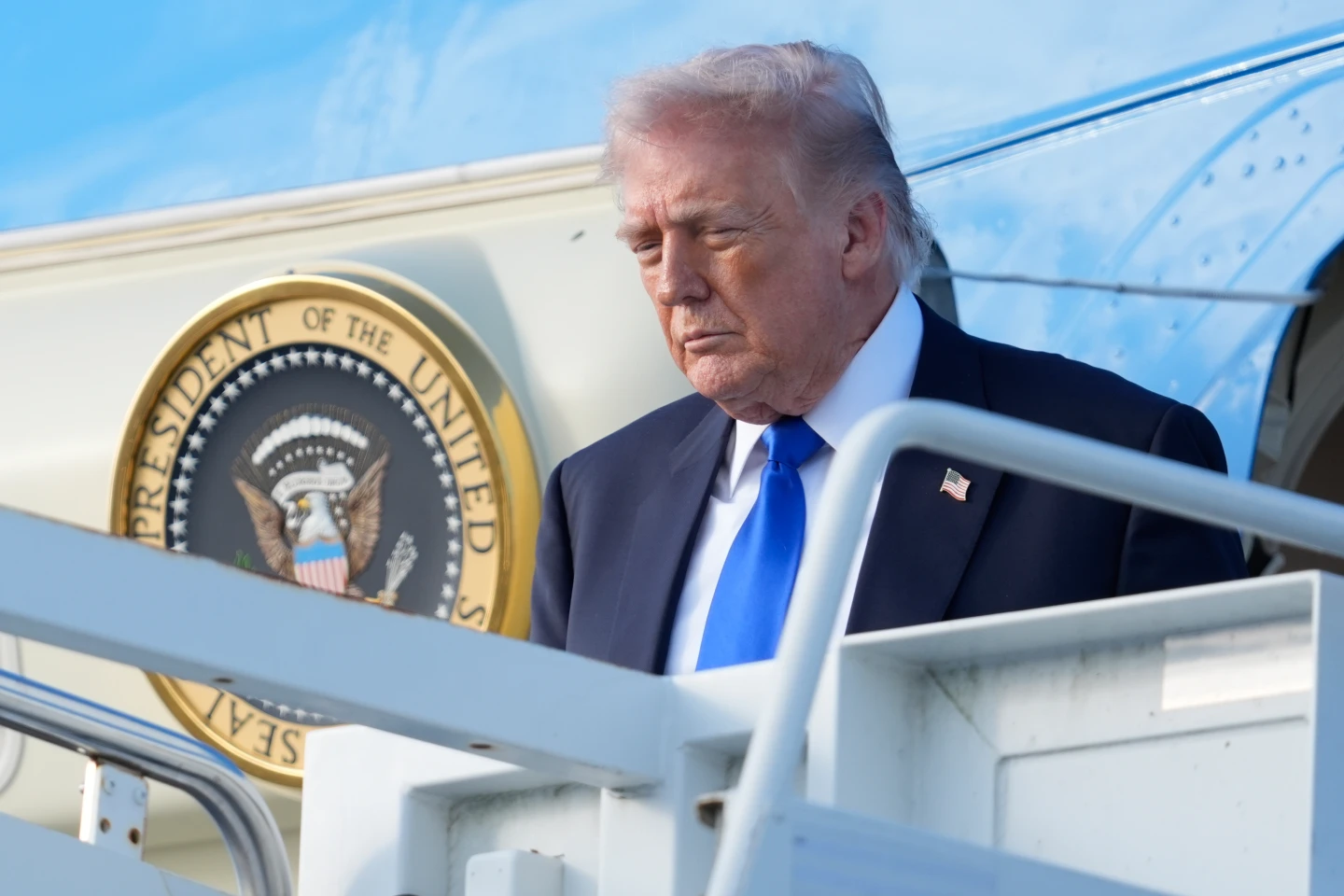
US President Donald Trump has announced there is a framework of a future deal with respect to Greenland. This unexpected statement follows a series of escalating tensions and threats of economic sanctions aimed at allies opposing his controversial plans to acquire the semi-autonomous territory of Denmark.
The announcement was made on Trump's Truth Social platform, following talks at the World Economic Forum in Davos, Switzerland. Trump noted that productive discussions with NATO Secretary General Mark Rutte led to the development of this framework but provided no further details, stating that negotiations would proceed. Rutte, however, confirmed that the issue of Danish sovereignty over Greenland was not addressed in their conversation.
Denmark's Prime Minister Mette Frederiksen has reaffirmed her position that while discussions about political, security, and economic matters are welcome, sovereignty is non-negotiable. Similarly, Greenland's Prime Minister Jens-Frederik Nielsen expressed readiness for a stronger partnership with the US but emphasized that sovereignty remains a 'red line'.
The New York Times has reported that one possibility under discussion could involve Denmark ceding control over select areas of Greenland for the establishment of US military bases, akin to the UK's military bases in Cyprus. However, both Denmark and Greenland have categorically rejected any notion of relinquishing sovereignty. Trump has argued for US control over Greenland citing potential threats from Chinese and Russian activity in the region, despite Denmark asserting that there is no immediate threat.
Discussions around the deal might focus on renegotiating military agreements established post-World War II, particularly a 1951 agreement allowing the US military presence in Greenland. Presently, there are over 100 US military personnel stationed at the Pituffik base. Trump has also indicated that ownership, not leasing, is essential for the defense of Greenland, complicating the potential for negotiations.
This evolving situation underscores the delicate balance of international relations within the Arctic, highlighting both security concerns and the steadfast commitment of Denmark and Greenland to maintain their sovereignty.