In brief
A team from Purdue University journeyed to Nikumaroro’s lagoon to investigate bright "Taraia Object" spotted on satellite imagery in 2020. On arrival, they discovered the object comprised a cluster of large tree trunks washed ashore, not aircraft. The finding underscores the role of ocean currents in transporting vegetation, which can reshape island landscapes amid rising sea levels. The excavation also highlights the subtleties of interpreting remote sensing data when assessing fragile island environments. Scientists remain hopeful that future explorations will further illuminate the complex interplay between natural debris and historic mysteries.
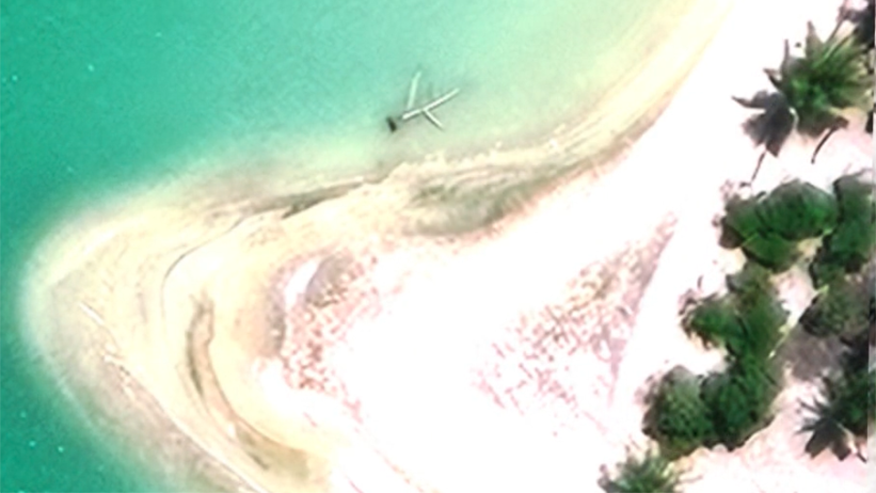
A Purdue University research crew traveled to the remote lagoon of the Taraia Peninsula on Nikumaroro, Kiribati, to confirm whether the luminous "Taraia Object" spotted on satellite photos was the remains of Amelia Earhart’s 1937 Lockheed Electra. Arriving after five days at sea, the team found the conspicuous mass had split apart and washed away, leaving only one Y‑shaped trunk cluster.
Researchers concluded the object was a swath of large trees deposited along the sandspit by storm‑driven currents rather than any aircraft debris. This conclusion came after noting the presence of the cluster in 1938 photographs that predate Earhart’s disappearance and after on‑site inspection of the broken wood.
While the mystery of Earhart’s fate remains unsolved, the discovery highlights how island ecosystems are reshaped by natural forces—particularly oceanic turbidity and the movement of vegetation across the Pacific. Rising sea levels and increased storm frequency linked to climate change could accelerate such vegetative drift, altering habitats for endemic species.
Dr. Rick Pettigrew, project director, emphasized the persistent ambiguity surrounding the site: "The island keeps its secrets, and we remain hopeful that future research will bring conclusive evidence."
The expedition also mapped the surrounding archipelago, plotting the distances between Nikumaroro, Howland Island, Papua New Guinea, and Hawaii to contextualize navigation challenges of the 1930s. The team’s five‑day voyage by sea and ensuing days of on‑shore investigation demonstrate the logistical hurdles of studying remote, fragile contexts—an issue mirrored in climate‑change fieldwork.