In brief
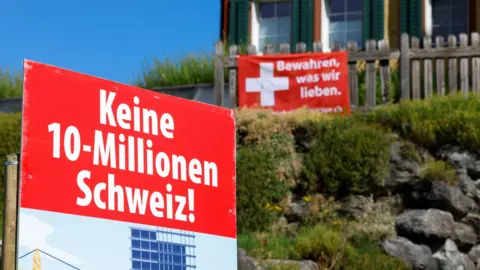
In a recent nationwide ballot, Swiss voters rejected a proposal from the Swiss People’s Party that would have capped the nation’s population at 10 million. The result—55% no, 45% yes—highlights the country’s commitment to its EU free‑movement agreement and underscores concerns that immigration‑focused policies fail to address real environmental and social challenges. Experts warn that a population cap could strain Switzerland’s labour market, erode its access to the single market, and create tensions with the EU. The decision reflects a broader shift away from scapegoating migrants and a preference for inclusive solutions to housing, transport and ageing‑population pressures.
Swiss voters rejected a 10‑million population cap proposed by the right‑wing Swiss People’s Party in a nationwide vote that turned 55% against and 45% for the measure, with a 60% turnout.
The cap was framed as a way to reduce pressure on transport, housing and the environment. Yet the bulk of the population, including 27% of the 9.1‑million residents who are non‑citizens, saw no tangible benefit in capping population numbers.
Justice minister Beat Jans welcomed the result, calling it “a sign of stability, openness and reliability.” The decision was also applauded by the Swiss government, business leaders, and most other political parties, all of whom feared that a population cap would undermine Switzerland’s free‑movement agreement with the European Union.
In cities such as Bern, 84% of voters rejected the cap, while key tourism destinations like Graubünden and Valais also voted ‘no’. Rural areas were more divided but still leaned against the proposal.
Economiesuisse’s chief economist Rudolf Minsch warned that approval could jeopardise relations with the EU, where over half of Swiss goods are traded. The cap would also limit access to a pool of skilled foreign workers that fills hotels, hospitals and care homes, where immigrants constitute a large proportion of the workforce.
He emphasised that the 20% of the Swiss population aged 65 and over would need the support of younger workers, many of whom currently come from abroad, to meet future demands. Ageing demographics therefore mean that immigration is a critical component of Switzerland’s social security and health systems.
Ursula von der Leyen, President of the European Commission, welcomed the outcome, noting that Switzerland and the EU share deep ties and a strong partnership. The vote also underscored the Swiss public’s scepticism of framing social problems purely as immigration issues.
"The Swiss people have spoken. The EU and Switzerland share deep ties and a strong partnership," said von der Leyen. Meanwhile, party representatives highlighted that solutions to housing shortages, traffic congestion and healthcare pressures must move beyond blaming migrants.
Swiss citizens who voted ‘no’ cited a desire for policy that addresses economic, environmental, and social realities without restricting the open border system that sustains the nation’s connectivity with Europe.