In brief
The Brent crude oil benchmark has reached $109.91 a barrel, fueled by an airstrike on the South Pars gas field, which is critical to Iran's natural gas production. Iranian military forces have issued warnings regarding potential retaliatory actions, further escalating geopolitical tensions that could impact global energy prices.
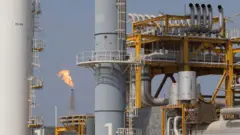
Oil prices leapt to nearly $110 a barrel after Iranian media reported an airstrike hitting a facility on the world's largest natural gas field.
The Brent crude oil benchmark hit $109.91 a barrel just after 14:30GMT, more than 5% higher than Tuesday's prices. It remains above $108.
The surge followed a report from Tasnim, a news agency affiliated with the Islamic Revolutionary Guard Corps (IRGC), that Iran's petrochemical complex on the South Pars gas field had been hit.
The benchmark UK gas price also jumped by 6% to 143.53p a therm before falling back below the 140p mark.
While the price of both oil and gas spiked, they remained below highs seen earlier in the conflict. Oil reached $116.78 a barrel on 9 March, while UK gas reached 162.55p a therm on 3 March.
Iran's oil ministry said a fire at the petrochemical complex was under control on Wednesday afternoon, but the extent of the damage to the facility remained unclear.
Iran's military warned it would take decisive action in response to the strike on its energy infrastructure. The military stated, If the fuel, energy, gas, and economic infrastructures of our country are attacked... we will retaliate strongly at the earliest opportunity.
In response to the attack, Iran has also suspended the flow of gas to Iraq to secure domestic supplies. The majority of Iran's gas supply—94%—is used domestically, according to the Gas Exporting Countries Forum.
Qatar, which operates facilities in the same field, had halted production earlier in March amid rising conflict tensions. The foreign ministry of Qatar voiced that strikes on energy infrastructure constitutes a threat to global energy security.\