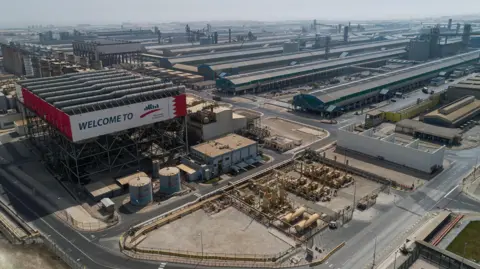
The Gulf region is witnessing escalating tensions as Iranian attacks have targeted critical industrial infrastructure. Recently, reports emerged of strikes on an aluminium plant in Abu Dhabi, owned by Emirates Global Aluminium, leading to injuries among workers and significant damage. Concurrently, Aluminium Bahrain confirmed an attack on its operations, injuring two employees at one of the world’s largest aluminium smelting facilities.
This surge of hostilities coincides with Yemen's Iran-backed Houthis entering the conflict, raising alarms about economic disruption in the region, particularly if they venture to target shipping lanes in the Red Sea. Recently, the Houthis have launched missiles aimed at sensitive military targets in Israel, prompting fears of increased prices for oil and gas as Iran effectively shuts down the strategic Strait of Hormuz.
Oil prices have already begun to spike following these events, with analysts warning of further escalation should disruptions in shipping routes occur, reminiscent of the Houthis' previous attacks that followed similar patterns of conflict.
In recent developments, Oman is currently investigating cowardly attacks that have resulted in injuries due to a drone strike at the port of Salalah, while Kuwait reports significant damage to its international airport's radar system from an attack involving multiple drones.
Moreover, Iran's Islamic Revolutionary Guard Corps (IRGC) has threatened retaliation against the US and Israel following attacks on Iranian steel production facilities. As the situation develops, Israel continues its military operations against threats emerging from Iran and Lebanon, where recent targeted strikes have resulted in civilian casualties, including journalists.
The regional instability not only poses immediate threats to infrastructure and public safety but also has broader implications for global energy security and economic stability.