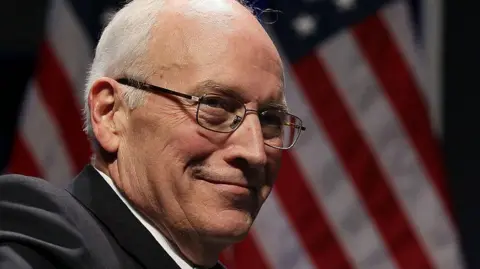
Dick Cheney, who has died at the age of 84, had a glittering - if controversial - career in American public life.
He served as President Gerald Ford's White House chief of staff in the 1970s, before spending a decade in the House of Representatives.
President George H W Bush made him defence secretary during the first Gulf War and the US invasion of Panama.
In 2001, Cheney became one of the most powerful vice-presidents in history.
He was a key architect of President George W Bush's 'War on Terror' after the 9/11 terrorist attacks, and an early advocate of the invasion of Iraq.
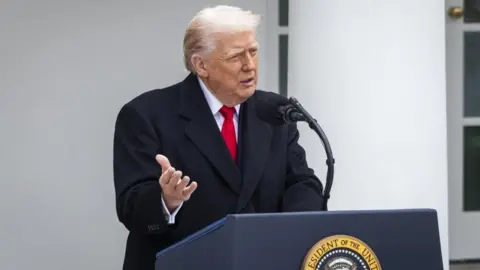
But, in his final years, he became a bitter critic of the Republican party under the leadership of President Donald Trump.
In our nation's 248-year history, there has never been an individual who is a greater threat to our republic, Cheney said.
Richard Bruce Cheney was born in Lincoln, Nebraska, on 30 January 1941. His father worked for the US Department of Agriculture, while his mother had been a successful softball player in the 1930s. At 13, his family moved to Casper, an oil town in Wyoming. In 1959, Cheney entered Yale on a scholarship but failed to graduate.
Cheney’s first taste of Washington came in 1968 when he worked for William Steiger, a young Republican representative from Wisconsin. Legend has it that he caught the eye of Donald Rumsfeld, who mentored him in the Ford White House.
Cheney will be remembered for his role in the Gulf War, his promotion of military force against Iraq, and his influential position during the Bush administration.
In the years following his vice presidency, Cheney’s views shifted, notably in support of his daughter’s marriage equality stance, drawing him further away from mainstream Republican positions.
Despite his long-standing conservative reputation, yet the culmination of his later life showed a complex individual whose contributions have led to an incomparable legacy, polarized between reverence and criticism.