In brief
At a national dialogue conference in Damascus, interim President Ahmed al-Sharaa declared an opportunity for Syria’s revival post-Assad, emphasizing the necessity for unity and disarmament among non-state armed groups. While recommendations on transitional justice and constitution reform were sought from 600 delegates, criticisms arose regarding the exclusion of key Kurdish groups and the rushed nature of the process.
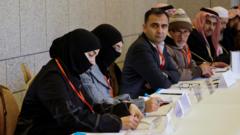
In a recent national dialogue conference in Damascus, Syria’s interim President Ahmed al-Sharaa heralded the event as a "historic" moment for the nation to embark on a rebuilding journey after the ousting of Bashar al-Assad. Addressing approximately 600 delegates, al-Sharaa stressed the importance of solidarity and integration among armed factions into a unified military structure, highlighting that “Syria's strength lies in its unity”.The conference participants were tasked with formulating recommendations on critical issues such as transitional justice, economic policy, a new constitution, and the foundational governance structure for the upcoming transitional government, which is set to be established shortly. However, the event faced backlash for perceived haste in its organization and the exclusion of significant players, particularly the Kurdish-led Syrian Democratic Forces (SDF), who control the north-eastern regions.Al-Sharaa, who assumed the presidency after rebel forces moved into Damascus late last year, posited that Syria’s liberation was achieved independently, thus necessitating autonomous rebuilding. "What we are living today is an exceptional, historic and rare opportunity," he remarked, urging those present to maximize every opportunity during this transitional period.Among the proposed measures, the establishment of a transitional justice body to address past atrocities was highlighted, with calls for disarming and consolidating territorial control by remaining non-state armed entities. Al-Sharaa asserted, “The unity of arms and their monopoly by the state is not a luxury but a duty and an obligation.”Despite this push for unity, the tension surrounding the exclusion of the SDF, which has declined to integrate its forces into the new governmental military framework, remains palpable. The SDF's spokesperson criticized the conference as a superficial representation of Syria’s diverse population, arguing that its proceedings aimed more to placate international observers than to address the genuine needs of the Syrian populace.Amidst these divides, activist groups like The Day After emphasized the necessity of inclusive dialogue, arguing that without all influential factions, Syria would struggle to maintain cohesion. International scrutiny is now turning towards the outcomes of this dialogue, with global powers urging a political process that genuinely reflects Syria’s ethnic and religious mosaic.As Syria navigates these complex waters post-Assad, the impact of international sanctions remains a contested topic. Recent moves from the EU to ease certain sanctions for humanitarian purposes were welcomed by some, while ongoing calls persisted from Syrian officials against these measures, advocating that they infringe on the country's sovereignty.The unfolding events are poised to set the tone for the future of Syria, which still grapples with the legacies of its civil war, and the road to recovery will likely be fraught with challenges. As the interim leadership seeks to define a stable governance model, the need for inclusive representation in dialogue and decision-making is underscored by observers both domestically and globally.