In brief
A permanent road bridge across the Tumen River between Rason, North Korea, and Khasan, Russia, has opened, promising smoother transit for cargo, passengers, and tourism. Officials present the bridge as a symbol of friendship and a catalyst for future economic, scientific, technological and cultural cooperation. However, intelligence groups warn that the crossing could serve as a covert logistics corridor, accelerating the transfer of North Korean weapons and military personnel to Russia to support its war in Ukraine. The opening marks a significant geopolitical shift and raises concerns about increased weapon exports and human rights violations linked to labor transits.
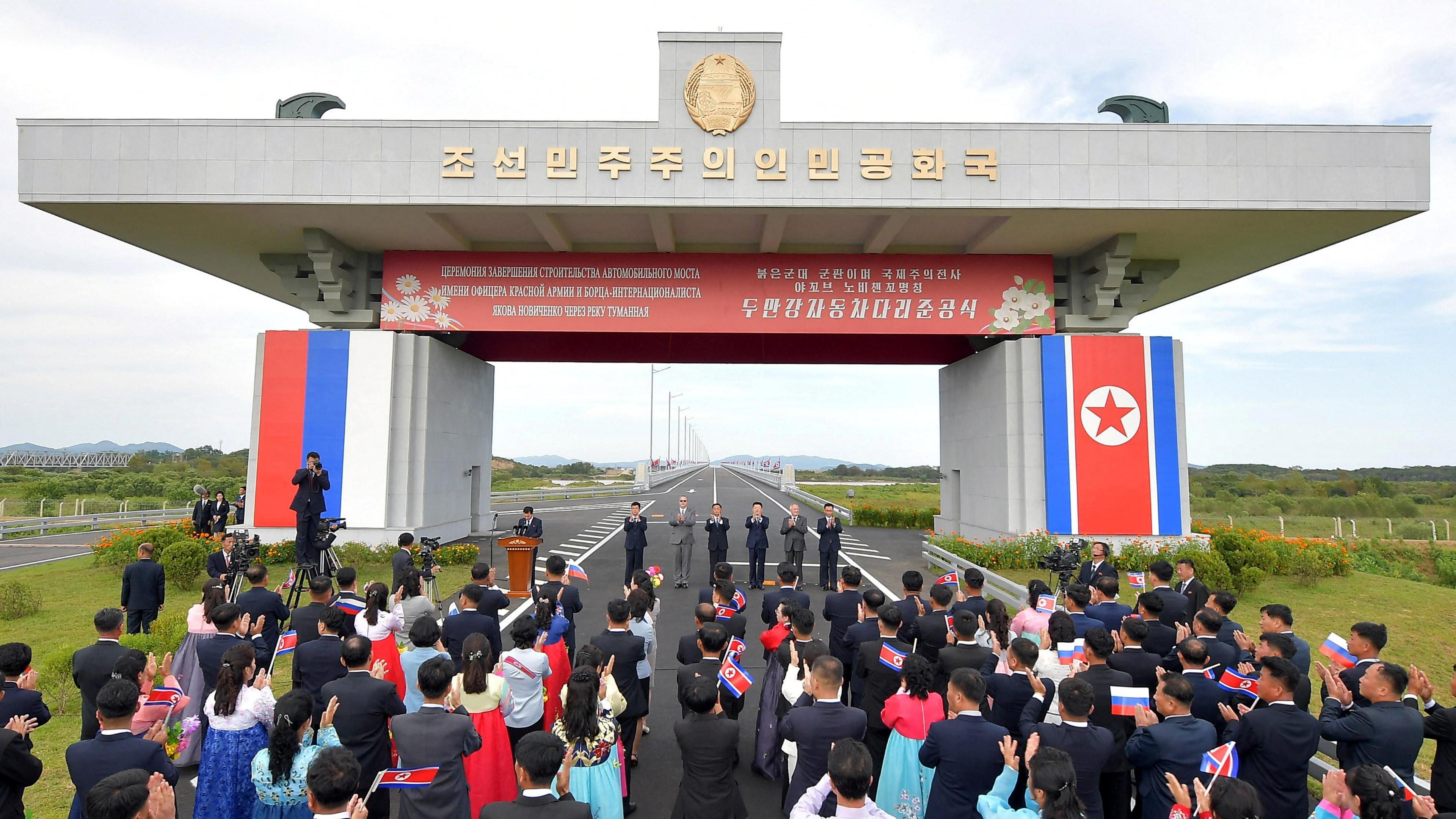
The first permanent road bridge spanning the Tumen River between Rason, North Korea, and Khasan, Russia, was officially opened this morning, allowing a continuous motorised link for cargo, passengers, tourism and personnel exchanges.
Pyongyang state media described the bridge as a vehicle for “personnel exchanges, tourism and trade,” while Russia’s Prime Minister Mikhail Mishustin hailed it as a “new symbol of friendship,” expecting up to 300 vehicles and 2,323 people to cross daily, according to TASS.
Ukrainian OSINT group Truth Hounds warned that the crossing could be used primarily to establish a covert military logistics corridor, supporting Russia in its war against Ukraine through the transfer of North Korean rockets, missiles, artillery shells and troops.
Construction began in 2025 after the 2024 partnership treaty during President Putin’s first visit to North Korea in 24 years; the 1-kilometre bridge took 495 days to complete amid delays.
While existing rail and air links already exist, the bridge completes a continuous land route that could boost the movement of North Korean labourers—estimated at 10,000—along with military personnel and technology into Russia.
Experts note that the bridge could accelerate the export of North Korean weapons and facilitate the transit of an estimated 11,000 North Korean troops fighting in Russia, potentially intensifying indirect involvement in the Ukraine conflict.
The new crossing underscores a shift in regional geopolitics and raises human‑rights concerns regarding forced labour and the violation of UN bans on North Korean workers abroad.