In brief
Nepalese authorities have decided to discontinue a waste deposit scheme that required climbers to pay $4,000 to ensure they brought down trash from Mount Everest. Despite its aim to tackle the mountain's waste problem, the program has been deemed ineffective. A new non-refundable clean-up fee is planned to support improved waste management efforts in the region.
A scheme to encourage climbers to bring their waste down from Mount Everest is being scrapped - with Nepalese authorities telling the BBC it has been a failure.
Climbers had been required to pay a deposit of $4,000 (£2964), which they would only get back if they brought at least 8kg (18lbs) of waste back down with them.
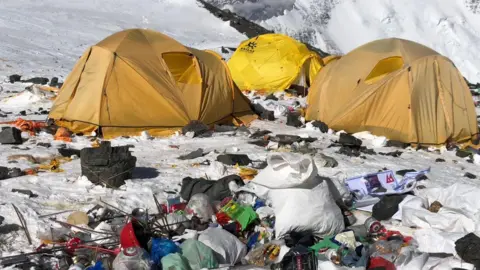
It was hoped it would begin to tackle the rubbish problem on the world's highest peak, which is estimated to be covered in some 50 tonnes of waste.
But after 11 years - and with the rubbish still piling up - the scheme is being shelved because it failed to show a tangible result.
Himal Gautam, director at the tourism department, noted that not only had the garbage issue not gone away, but the deposit scheme itself had become an administrative burden. Officials stated that most of the deposit money had been refunded over the years, indicating that climbers typically complied with the rule. However, the waste brought back was generally from lower camps, not the higher sections where waste is most problematic.
From higher camps, people tend to bring back oxygen bottles only, remarked Tshering Sherpa, CEO of the Sagarmatha Pollution Control Committee. The Everest region sees an annual waste production of up to 12kg (26lbs) per climber.
The flawed deposit scheme highlighted a significant monitoring gap, with officials noting, Apart from the checkpoint above the Khumbu Icefall, there is no monitoring of what climbers are doing. A new clean-up fee will be introduced, replacing the deposit requirement, which is intended to fund additional measures such as establishing checkpoints and deploying mountain rangers to enforce waste removal in higher camps. The Sherpa community welcomes this change.
The non-refundable fee will create a fund for ongoing clean-up operations and better monitoring of climbers' waste practices, stated Mingma Sherpa.
Annual estimates indicate that there are increasing concerns regarding not just waste management, but also the environmental impacts from the roughly 400 climbers who ascend the mountain each year.
}