In brief
Palau, a small Pacific nation, finds itself at the crossroads of international tensions between China, Taiwan, and the US. While it remains one of the few countries that recognize Taiwan, Beijing's influence has led to a significant decline in tourism from China, resulting in economic challenges and environmental issues. The US, concerned about China's military ambitions, is enhancing its military presence in Palau. Residents express anxiety about the long-term consequences of geopolitical conflicts on their fragile ecosystem and livelihoods.
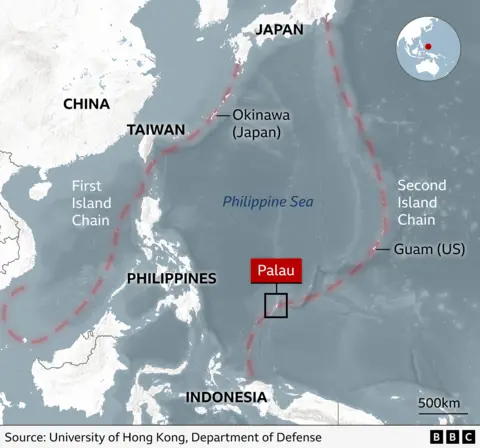
The air above Palau's pristine waters smells of salt and breadfruit, and on calm mornings in Koror, Palau's commercial centre, the whirr of dive boat engines echoes across the bay.A few years ago, those boats were filled with tourists – many from China – drawn to Palau's lagoons and limestone caves. Hotels were full, restaurants bustling, and fishermen could barely keep up with demand. But that is no more.The boom – and the abrupt collapse – was no accident. Between 2015 and 2017, Chinese tourists made up around half of its visitors. Then, in 2017, Beijing reportedly ordered tour operators to stop selling packages to Palau, slashing the main source of tourism to the islands at the time.Palau is one of only a dozen nations that still recognise Taiwan as a sovereign state, challenging Beijing's claim over the independently governed island. As such, its location makes it a strategic target for influence from global powers, crucial to the US military's strategies in the Pacific.The US has ramped up its military infrastructure in Palau, enhancing its military footprint under an agreement granting it exclusive access in return for economic aid, while Chinese investments near US military sites raise concerns over military ambitions should geopolitical tensions escalate.This evolving landscape affects the daily lives of Palauan citizens, who voice fears over becoming pawns in a broader geopolitical struggle, mindful of the environmental strains from both tourism and military presences, as they seek pathways to balance development with ecological sustainability.