In brief
NASA's Space Launch System (SLS) and Orion spacecraft are on their way to the launch pad for the Artemis II mission, which aims to send astronauts on a ten-day journey around the Moon. Despite a previous setback due to a helium system issue, repairs have been completed and engineers are readying the rocket for an April launch. The Artemis II mission could pave the way for future crewed lunar explorations.
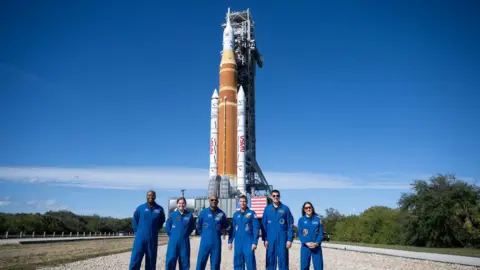
Nasa is rolling out its giant Moon rocket to the launch pad for a second time, ahead of a mission to send astronauts around the Moon – something not attempted in more than 50 years.
The 98m tall Space Launch System (SLS) and Orion spacecraft are making the four-mile journey from their assembly building to Pad 39B at the Kennedy Space Center in Florida.
The move comes after a problem with the rocket's helium system forced Nasa to abandon a launch attempt in March and return the vehicle indoors for repairs.
Engineers say the issue has now been fixed and hope that a series of final tests at the pad will confirm the rocket is ready for an early-April launch window.
Just after nightfall, the SLS emerged from the Vehicle Assembly Building (VAB) and began its slow crawl towards the Atlantic coast.
The rocket and its launch platform weigh about 5,000 tonnes and are being carried at a maximum speed of about 1mph. The gentle transition reduces stress on the rocket and allows for better monitoring during the journey.
As preparations continue, the Artemis II crew is also in pre-flight quarantine. They will travel to Florida closer to launch to take part in rehearsals involving suiting up and traveling to the pad. The mission is set to take place on April 1, 2026, aiming for a ten-day journey around the Moon.
This second rollout follows a thorough investigation into helium system issues detected during a previous fueling test. Nasa managers allowed the SLS to return to the VAB to ensure engineers had full access for repairs. Now, with fixes implemented, they are poised to proceed with critical tests that could lead to a historic lunar mission.