In brief
Prime Minister Benjamin Netanyahu's recent trip underscores the uncertainties and geopolitical tensions shaping the region as Israeli forces strengthen their hold in Syria amid ongoing conflict.
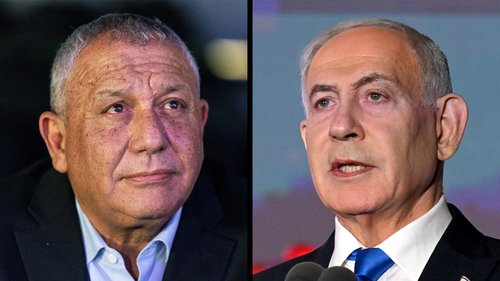
Prime Minister Benjamin Netanyahu made an unexpected visit to territory in Syria that is under Israeli control, as confirmed by his office on Tuesday. The specifics of the visit, including whether he ventured into areas recently captured or remained in regions annexed post-1967, were not disclosed, yet this unannounced trip emphasizes the ongoing Israeli military presence across the de facto border with Syria.Following the recent downfall of President Bashar al-Assad, Israeli military forces have intensified territorial seizures, which officials describe as necessary for security. This military operation and its implications have been met with wariness from the Syrian rebel alliance, which aims to establish a stable government in Damascus after ousting Assad.In recent actions, Israeli forces claimed strategic regions in southwest Syria, including the summit of Mount Hermon. Netanyahu’s meeting involved discussions with top military officials to strategize on the Israel Defense Forces' (I.D.F.) deployment and future actions, although specifics on the meeting's location were not provided.Israel has not indicated any timeline for pulling its forces from the newly seized areas, maintaining that their presence will persist until security conditions are deemed satisfactory. Concurrently, Israeli airstrikes have targeted various Syrian military infrastructure elements, emphasizing their commitment to averting threats to Israeli civilians in the Golan Heights, a territory deemed illegally occupied under international regulations since its seizure during the 1967 Arab-Israeli War.In a notable development, Israel's government has also approved plans proposed by Netanyahu to augment settlements in the Golan Heights, potentially doubling the area’s population. This action has drawn criticism from the Syrian rebel coalition's leader, Ahmed al-Shara, who stated that Israel’s military maneuvers violate the 1974 armistice understood by both nations.The ongoing Israeli operations illustrate deeper military complexities as Syria's leadership confronts its control challenges amidst foreign military interests. Meanwhile, U.S. airstrikes have targeted sites purportedly linked to Islamic State activities in the region, contributing to the multifaceted conflict. Tensions continue to escalate with renewed fighting between the U.S.-backed Kurdish forces and the Syrian National Army supported by Turkey in northern Syria.Internationally, Russia retains military installations in Syria to support Assad but has expressed uncertainty regarding the future of these bases. The rapid developments have highlighted the fragile balance of power in the region as external military pressures continue to complicate Syria’s recovery journey.