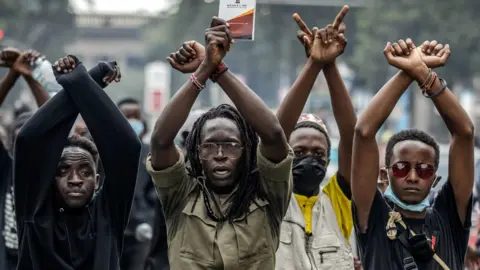
The Kenyan authorities paid a network of trolls to threaten and intimidate young protesters during recent anti-government demonstrations, Amnesty International has said.
A new report by the human rights organization stated that government agencies also employed surveillance and disinformation to target organizers of mass protests that swept across Kenya in 2024 and 2025.
The demonstrations were largely driven by 'Gen Z' activists who utilized social media platforms to mobilize.
In response to Amnesty's report, Kenya's Interior Minister stated that the government does not sanction harassment or violence against any citizen.
However, Amnesty alleged an organized effort to silence and suppress these young activists. The report notes that young women and LGBT+ activists faced disproportionate harassment, including misogynistic comments and threats tied to AI-generated sexualized imagery.
Activists revealed that they received threats to their safety, with one stating: I had people coming into my inbox and telling me: 'You will die and leave your kids. We will come and attack you'. This environment led me to change my child's school.
Furthermore, it emerged that some individuals were paid between 25,000 to 50,000 Kenyan shillings (~$190-$390) daily to propagate government narratives online and suppress protest-related hashtags on social media. The authorities have faced serious accusations of using brutal force against demonstrators, with over 100 reported fatalities during two waves of protests.
Amnesty's report highlighted a severe crackdown, including arbitrary arrests and enforced disappearances, as the protests aimed to highlight increasing taxation, rising femicide rates, and ongoing corruption issues in Kenya. The organization believed these digital campaigns represented a coordinated effort by state-sponsored trolls to pacify dissenting voices.
Despite some recognition from the government of excessive police force, Interior Minister Kipchumba Murkomen emphasized that any unlawful conduct by law enforcement officers would lead to investigations and consequences.
Additionally, Amnesty expressed concerns over possible state surveillance, with allegations claiming mobile data monitoring of protest leaders, which has been denied by Kenya's largest telecom operator, Safaricom.