In brief
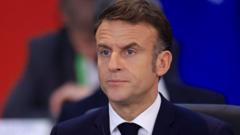
The recent announcement by President Macron to create a commission reflects France’s acknowledgement of its colonial past while addressing Haiti's plight, spotlighting historical grievances and the necessity for reparative dialogue.
In a landmark move, French President Emmanuel Macron has announced the formation of a commission tasked with exploring the complicated history between France and Haiti, centering on the implications of a monumental debt coerced upon Haiti upon its independence. This endeavor marks the 200th anniversary of Haiti's liberation from colonial rule in 1804.In a bid for reconciliation and a more harmonious future, the panel, containing historians from both nations, is expected to provide insights and recommendations stemming from this historical analysis. Haiti's painful financial obligation surfaced in 1825 when France demanded 150 million gold francs—later reduced to 90 million—as compensation to former slave owners, a stipulation that would hinder Haiti’s economic and political stability for over a century. The crushing debt was not settled until 1947, a factor contributing significantly to Haiti currently being one of the least stable and poorest countries in the Americas.Haitians have voiced their frustration for generations, advocating for reparations from France for the financial burdens imposed by the “independence debt.” While the specific discussions regarding financial reparations remain vague in the commission’s scope, Macron’s comments reveal a recognition of the historical injustices experienced by Haiti. He admitted that the debt effectively "put a price on the freedom of a young nation," forcing Haiti to grapple with the burdens of a painful history from its very onset.In an interview with Le Monde, prominent Haitian writer Monique Clesca articulated the need for France to acknowledge the adverse effects this debt had on Haiti’s trajectory. Although merely recognizing such an injustice may not entirely erase the scars of history, Clesca believes it could alleviate some ongoing suffering and improve France’s diminishing influence, particularly in regions like Africa where former colonies are increasingly distancing themselves from France.Haiti is currently engulfed in dire socio-economic turmoil, insufficient political authority, and rampant gang violence—a situation exacerbated by over 5,500 casualties in 2024 alone due to escalating conflicts. Efforts to stabilize the nation through the transitional presidential council have yielded minimal progress, leaving critical elections postponed and the democratic framework in limbo.As the commission convenes, the focus will hopefully extend beyond historical analysis to proactive strategies that may enhance the relationship between these two nations, fostering understanding and promoting sustainable solutions reflective of a shared history.