In brief
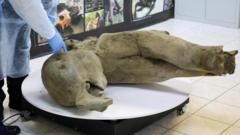
An extraordinary discovery has emerged from the thawing permafrost of Siberia, where Russian scientists revealed the remains of a baby mammoth named "Yana." This remarkable specimen, dating back 50,000 years, was found in the Batagaika crater of the Yakutia region during the summer months. Experts declare it as the best-preserved mammoth carcass ever discovered.
The baby mammoth, which weighed over 100kg (15st 10lb) and measured 120cm (4ft) tall by 200cm long, was estimated to have been just one year old when it perished. Previously, only six similar discoveries of ancient mammoths had been made worldwide, highlighting the uniqueness of this find. The remains were discovered by local residents who noticed the mammoth thawing and constructed a makeshift stretcher to extract it safely from the permafrost.Maxim Cherpasov, head of the Lazarev Mammoth Museum Laboratory, explained that while parts of the mammoth had been lost to natural predators, the skull remains notably intact, providing invaluable insights into the species. Gavril Novgorodov, a researcher at the museum, speculated that the mammoth may have become trapped in a swamp, thus preserving its remains over millennia.Yana is currently being analyzed at the North-Eastern Federal University in Yakutsk, where scientists are conducting studies to determine the specifics of her death. This discovery is one of many linked to the ongoing thawing of permafrost due to climate change, as evidenced by the recent finds of a 32,000-year-old sabre-tooth cat and a 44,000-year-old wolf in the same region. These remarkable revelations underscore the importance of continued research in these vulnerable ecosystems.