In brief
The Kenyan government's ambitious vaccination drive for cattle and small ruminants has sparked a significant backlash from farmers, driven by misinformation and distrust surrounding the initiative. As the government strives to combat livestock diseases, numerous conspiracy theories have emerged, complicating the public's acceptance of the program.
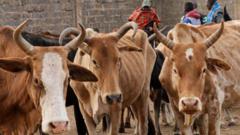
An ambitious initiative aimed at vaccinating Kenya's livestock is set to commence this week, yet it faces significant resistance from farmers who are increasingly influenced by misinformation. The government assures that the vaccination program—which targets at least 22 million cattle and 50 million goats and sheep over three years—will come at no cost to farmers, yet skepticism persists.In the Mai Mahiu region of Nakuru county, cattle owner Robert Nkukuu expressed the intense pressure within the community against vaccination efforts. "If the community here learns you are pro-vaccination they will slay you just now. So stop talking about it, we don't want it," he declared, showcasing the hostile environment surrounding the topic since President William Ruto announced the initiative last November.Currently, only 10% of the national herd receives necessary vaccinations, and the government aims to increase this to 85%, thereby improving Kenya's livestock products for export eligibility. Vaccines are viewed as vital by authorities in controlling foot-and-mouth disease and peste des petits ruminants (PPR), but many farmers have baselessly connected the initiative with technology mogul Bill Gates, suspecting foreign influence.Despite denials regarding Gates's involvement, rumors fueled by social media have proliferated, spurring notable figures to resist the vaccine. Former journalist Caleb Karuga emphasized the refusal to vaccinate based on misinformation, while opposition senator Ledama Olekina questioned the need for vaccination among animals in Europe and America.Experts have clarified that no current vaccines aim to reduce methane emissions from livestock, a common concern driving conspiracy theories. Prof. Ermias Kebreab of the University of California, Davis, confirmed the lack of vaccines that alter their genetic makeup. Meanwhile, opposition leader Kalonzo Musyoka labeled the campaign a "violation of the constitution" and shrouded in secrecy.President Ruto dismissed dissenting opinions as "misguided" and questioned the relation between vaccination and methane emissions. Analysts attribute the widespread mistrust to the government's poor communication, stemming from previous tax increases and corruption scandals that have left Kenyans wary of government initiatives.The Kenya Veterinary Association has called for a pause on the vaccination rollout to allow for public education, with Dr. Kelvin Osore stressing communication is critical to stem misinformation. However, authorities argue that the recent outbreak of foot-and-mouth in western Kenya necessitates prompt action to prevent further economic damage.Agriculture Minister Mutahi Kagwe emphasized the program's voluntary nature and the need for transparent communication to tackle misleading narratives. Although some farmers express safety concerns, others appreciate the initiative, highlighting the need for thorough public awareness campaigns.As the debate continues, the intersection of agricultural health, public trust, and effective communication will significantly impact the success of Kenya's livestock vaccination initiative.