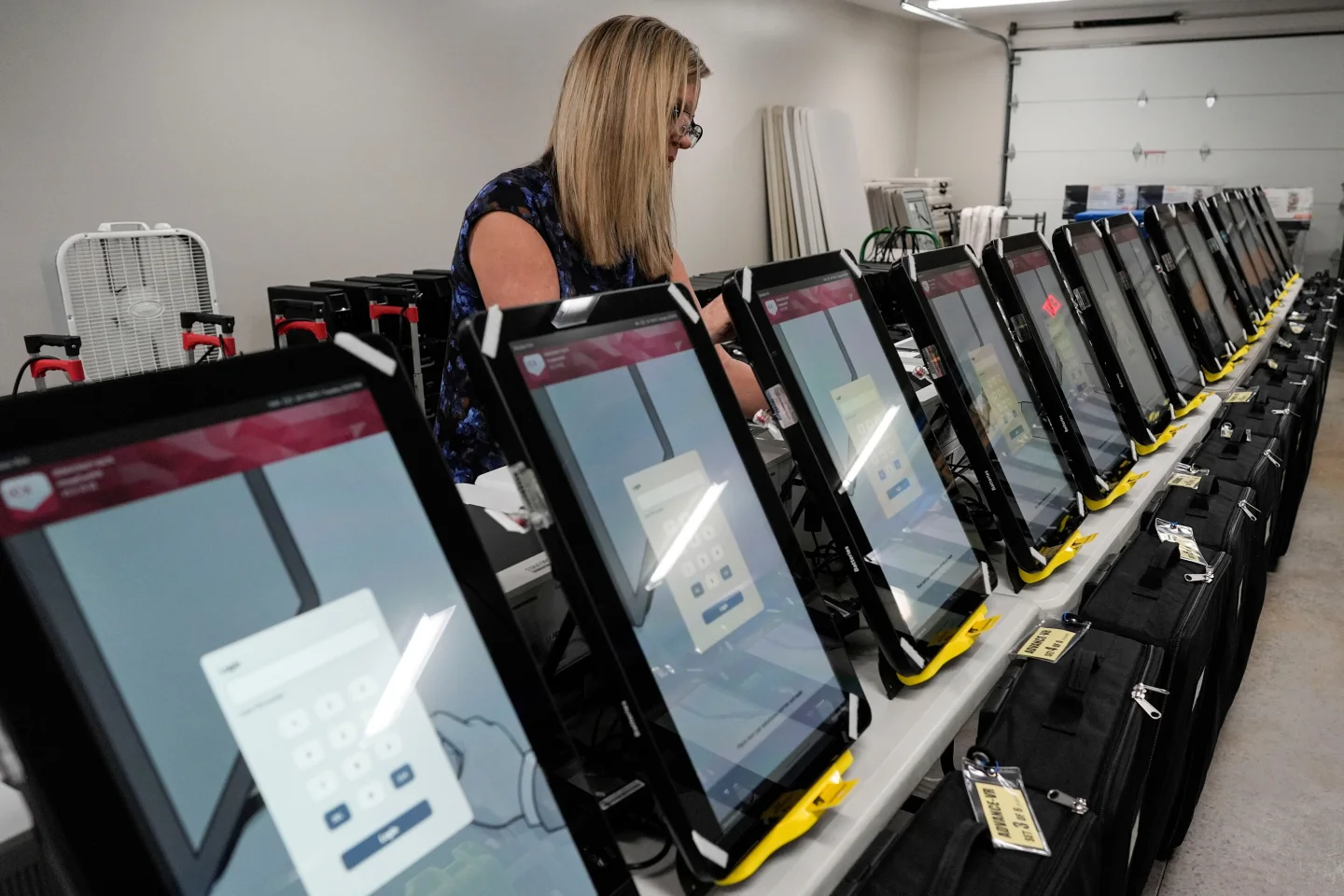
ATLANTA (Echosphere) — The Georgia General Assembly ended its session without addressing a critical need for new voting equipment, casting doubt on the integrity of upcoming elections scheduled for November.
Months of debate culminated in inaction, leaving voters wondering how they will cast their ballots this fall. Critics, including Democratic state Rep. Saira Draper, have accused Republican legislators of shirking their responsibilities.
Georgia currently utilizes Dominion Voting machines that have faced scrutiny and scrutiny following allegations of inconsistencies during the 2020 election. Most recently, barcodes on ballots have become a focal point, as supporters of former President Trump moved to ban them in future elections through a legislative amendment.
However, existing state laws compel counties to continue using these machines. Since no financial provisions have been allocated for reprogramming, lawmakers have failed to reach a consensus on how to effectively replace them.
“We’ll face a substantial statutory conflict by July 1,” warned Victor Anderson, Chairman of the House Governmental Affairs Committee, who previously endorsed a proposal for a temporary voting process that would sidestep QR codes by 2028, a solution favored by many election officials.
The Senate, however, declined to move forward with Anderson's plan, deepening the sense of uncertainty. Democratic representatives have criticized their Republican counterparts, stating lawmakers' focus on political advantages overshadowed the needs of voters.
“The Senate has shown that they’re not responsible actors,” Draper remarked, indicating that party loyalty appears to outweigh constituents' needs.
With this legislative stalemate coming shortly before elections, those in charge of administering the voting system, like Joseph Kirk, Bartow County's election supervisor, are awaiting guidance from the Secretary of State's office on how to navigate potential conflicts and legal directives.
Joseph Kirk stated, “This is uncharted territory,” while others within the election community expressed frustration about the lack of supportive legislation and the looming complexity of transitioning to a new voting method if required.
House Speaker Jon Burns communicated plans to consult with Georgia's outgoing governor, Brian Kemp, about possibly convening a special session to address the issues resulting from the assembly’s inability to act. Meanwhile, Anderson and other election officials reiterated the necessity for legislative action to avoid confusion and ensure a fair voting process in November.
As election officials await a viable plan, stakeholders stress the importance of collaboration between lawmakers and those overseeing elections. Without appropriate legislative action, the state may be forced to adopt antiquated voting methods, such as hand-marked paper ballots, for an election that will be pivotal in deciding Georgia's political future.