In brief
The ongoing military campaign in Iran is causing a rift among American conservatives, highlighted during this year's Conservative Political Action Conference (CPAC). While older conservatives largely support President Trump’s approach, many younger attendees express skepticism and concerns about the war's implications for domestic stability and living costs.
The military campaign in Iran has reached its fourth week, and despite a majority of the American public opposing it, most Republicans have continued to back President Trump. However, dissent is growing, particularly among younger conservatives attending the Conservative Political Action Conference (CPAC) in Texas.
At CPAC, attendees, especially from the younger generation, voiced their concerns about the reasons behind U.S. military involvement in Iran and the lack of clarity on long-term goals. Samantha Cassell, a Dallas resident at her first CPAC, expressed a desire for more transparency regarding the motivations behind sending troops overseas, stressing that rising living costs are making everyday life increasingly challenging.
Conversely, many older conservatives at the conference retained their unwavering support for Trump, believing there is a critical threat posed by Iran, especially regarding nuclear capabilities. Their trust in Trump's judgment was evident, with some asserting that the conflict was necessary for national security.
The generational schism was also echoed in survey data, revealing that while 84% of Republicans approve of Trump’s handling of the war, only 49% of younger Republicans feel the same way. This divide was highlighted as younger conservatives pushed back against interventions abroad, emphasizing that America has pressing issues at home that require attention and resources.
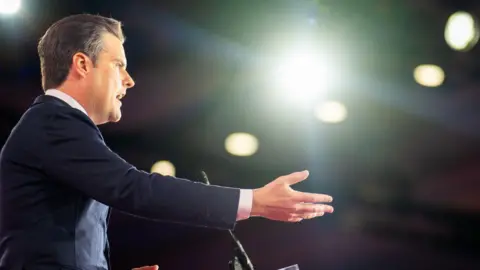
While some see the potential for prolonged conflict, CPAC attendees received mixed messages, including from former Congressman Matt Gaetz, who warned of potential economic consequences tied to ongoing military operations.
The push for military engagement is complicated by diverse perspectives among the conservative base, which could impact voter enthusiasm heading into future elections. With growing calls for Trump to find an exit strategy from this conflict, challenges remain for the Republican party as it navigates shifting opinions on foreign policy amidst mounting domestic concerns.