In brief
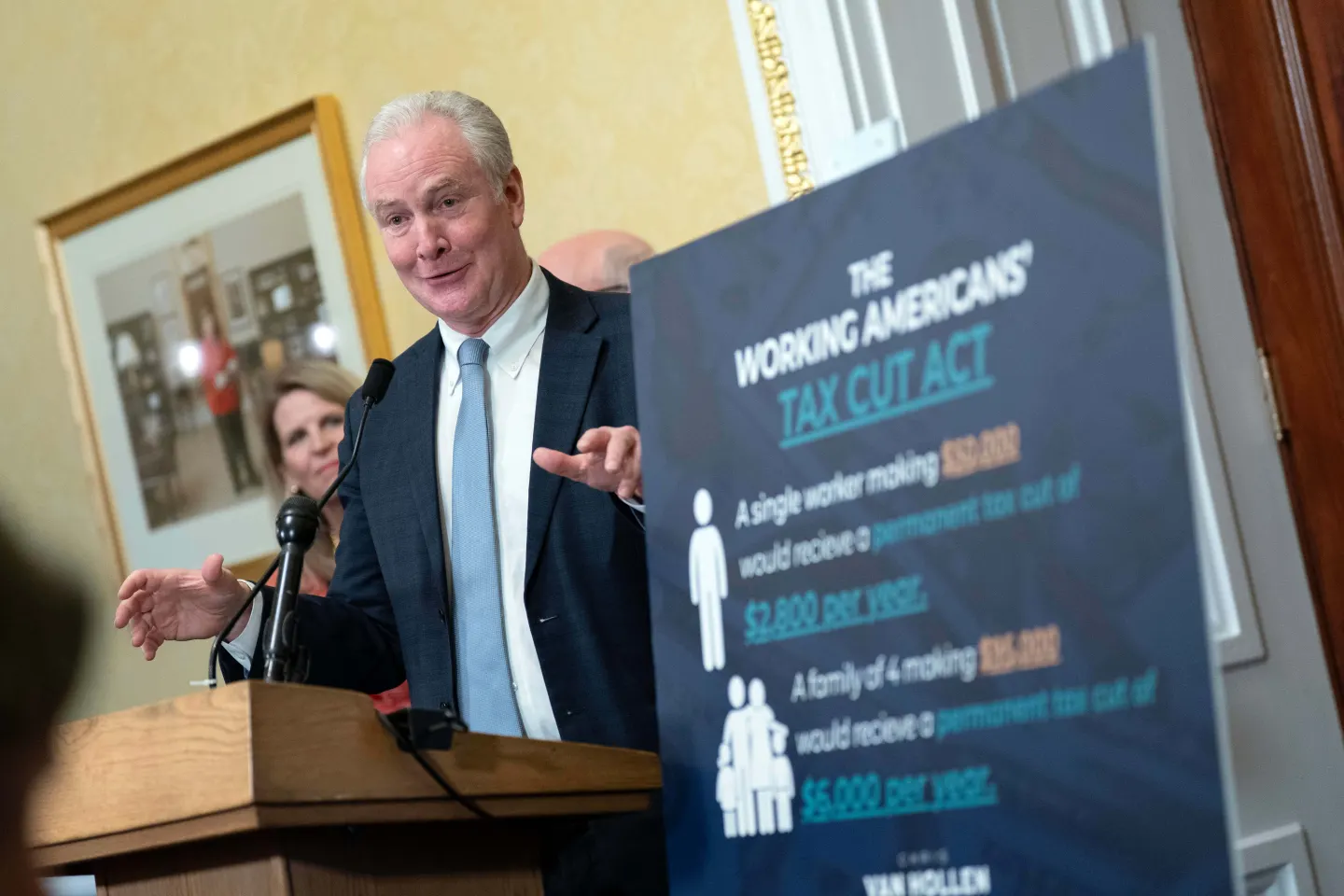
Amidst persistent affordability concerns from voters, some Democrats, led by Senators Chris Van Hollen and Cory Booker, are proposing significant tax cuts for lower-income individuals and households. This shift, reminiscent of Republican strategies, may help Democrats regain electoral ground but threatens potential revenue needed for other initiatives. Proponents argue the focus is on simplification and direct benefits to constituents as the party looks to redefine its economic policies ahead of elections.
As cost of living pressures persist, Democrats are making a strategic pivot, engaging in tax cut proposals traditionally associated with Republican party strategies. Senators Chris Van Hollen and Cory Booker are leading the charge with proposals aimed at significantly reducing or eliminating income tax burdens for individuals and families in lower income brackets.
Senator Van Hollen's proposal seeks to eliminate federal income taxes for individuals making $46,000 or less, while also reducing the tax rate for those earning up to more than $60,000. Meanwhile, Senator Booker aims to exempt households earning up to $75,000 from paying federal income taxes entirely.
These proposals signal a potential shift in the Democratic party’s approach as they grapple with shaping their image to appeal to frustrated voters who feel overlooked. Booker's initiatives have been framed as responsive to constituents seeking bold action in the face of economic challenges, distancing from Trump's tax policies while adopting a more populist tone.
However, these tax cuts could come at a cost, limiting funds available for social programs and other critical government initiatives. Critics are concerned that for all the proposed tax relief, affluent taxpayers may still receive disproportionate benefits. For instance, under Booker's plan, while lower-income families may see their tax burdens drop drastically, wealthier individuals might still reap significant tax savings given their higher initial tax liabilities.
Additionally, proposals from figures like Rep. Katie Porter, running for California governor, echo a similar call for straightforward tax frameworks, emphasizing clarity over complexity. Porter's plan suggests not taxing families earning under $100,000, critiquing the convoluted approaches often associated with Democratic policy-making.
This renewed focus on tax cuts is reflective of internal dynamics within the Democratic Party, which has evolved into a coalition that includes more affluent urban voters while also trying to retain its working-class base. The balancing act includes a commitment to tax raises for ultra-wealthy individuals as a means to finance these proposed tax breaks for lower-income brackets.
As the landscape continues to change, prominent labor organizations like the AFL-CIO are backing these initiatives, recognizing the need for policies that directly address worker concerns. This evolution in tax policy represents a critical moment for the Democratic Party, as it seeks to navigate voter sentiment, economic reality, and its own ideological foundations.