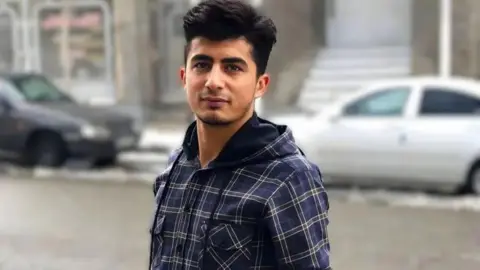
The line is crackly. But the voice of Mehrab Abdollahzadeh is clear and, given the circumstances, surprisingly steady. He's on death row in western Iran. He speaks quickly - as if time is running out. And his message is desperate. You are hearing my voice from Oromiyeh Central Prison, and this may be the last time you hear it, he says in a voice note obtained by the Kurdistan Human Rights Network. Abdollahzadeh, arrested in 2022 during nationwide protests after the death of Mahsa Amini, was forced to confess through torture. After 42 months of fear, he was executed this month. Following the US-Israel conflict emergence, the UN has confirmed 32 political executions this year alone, a marked increase from previous years, with Amnesty International reporting 45 politically motivated executions across all of 2025. Activists warn that the Iranian regime is using executions to instill fear among citizens and suppress any political dissent. With claims of torture and lack of transparency in judicial proceedings, human rights organizations fear that time is running out for many others still facing similar fates.
Escalating Executions in Iran Amidst Political Turmoil
Escalating Executions in Iran Amidst Political Turmoil
An alarming increase in political executions marks a grim period in Iran following the recent war outbreak, highlighting concerns over human rights abuses.
Since the onset of hostilities between the US and Israel and Iran, Iran has witnessed a severe uptick in political executions, with at least 32 verified cases reported by the UN. Activists suggest that the death penalty is being weaponized to quash dissent amid a climate of fear and repression, particularly targeting those involved in recent protests.