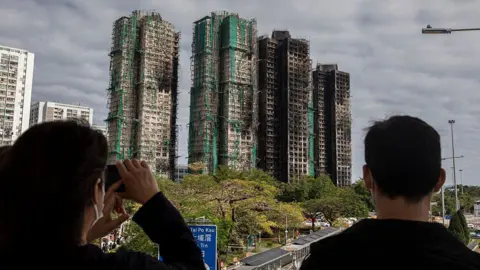
As the city of Hong Kong grapples with the aftermath of a devastating fire that killed nearly 160 people, residents are casting their votes in an election perceived as a critical measure of public sentiment. The election for the Legislative Council (LegCo) is taking place amid mourning, following the Tai Po fire that has raised serious questions about building safety and governance.
The government has undertaken a significant effort to encourage voter participation, including various incentives such as vouchers and free entry to public facilities. All candidates have been vetted to ensure loyalty to the Chinese government, reflecting ongoing tensions regarding Hong Kong's political future.
In the wake of the tragedy, which is marked as the worst fire incident in over 70 years, authorities have initiated investigations and arrested several suspects for suspected manslaughter. The government's responses have been swift, with aid distributed to survivors and a commitment to improve building regulations noted by many residents.
This election stands as a stark illustration of the complexities within Hong Kong's political landscape, resonating deeply as it follows significant changes enacted by Beijing that limit electoral participation. Critics argue that these reforms jeopardize democracy, while proponents claim they are essential for stability.
Turnout is critical, as a significant participation is interpreted as a validation of the electoral process in the tight political atmosphere following the fire incident. While some citizens are hopeful, others remain skeptical of the government’s intentions, complicating the narrative around voter engagement.
Hong Kong Chief Executive John Lee emphasized the need for reconstruction and reform, tying the election to the potential future of the city post-tragedy. Observers, however, predict that voter turnout may be low due to the emotional weight of recent events and dissatisfaction with the current political system.