Aviation safety campaigners in the United States claim they have evidence that a Boeing 787 Dreamliner involved in a catastrophic crash in India last year had previously suffered a series of technical failures, including an in-flight fire.
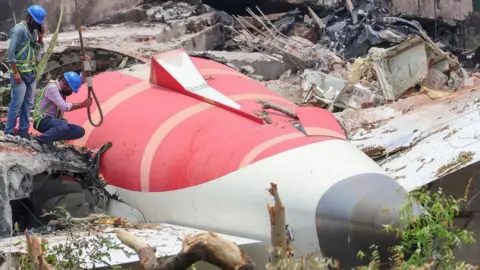
The aircraft, which crashed on June 12, 2025, shortly after taking off from Ahmedabad for London, resulted in the tragic loss of 260 lives. This revelation comes from the Foundation for Aviation Safety, a US campaign group that has sent a detailed report to the US Senate based on documents highlighting these earlier issues.
Despite an ongoing official investigation by India's Aircraft Accident Investigation Bureau (AAIB), the interim report published in July raised significant speculation and concern. Boeing has thus far declined to comment on allegations regarding the aircraft's safety record.
Identified as VT-ANB, this aircraft was one of the first 787s manufactured, entering service with Air India shortly after its first flight in 2013. According to the Foundation for Aviation Safety, records indicate that the plane experienced multiple system failures from its first day in service, attributed to a variety of engineering, manufacturing, quality, and maintenance deficiencies.
Specific failures reported include various electronics and software faults, repeated circuit breaker trip incidents, damage to wiring, short circuits, loss of electrical current, and overheating of power system components. Notably, a significant incident in January 2022 involved a fire in the P100 power distribution panel, revealing the extent of the aircraft's electrical issues.
The 787 Dreamliner relies heavily on electrical systems and has previously faced criticism for battery fires and other related issues, prompting concerns from regulators and advocates alike. A month after the accident, the AAIB released a preliminary report stating that during the climb after takeoff, the plane's fuel control switches were suspected of being moved, compromising engine thrust and ultimately contributing to the disaster.
Following this report's release, discussions have heated up among pilots, technical experts, and safety advocates who feel the emphasis placed on pilot error has overshadowed potential mechanical failures, suggesting a more significant investigation into the aircraft's technical history is necessary.
Amid widespread concern, the Foundation for Aviation Safety is not only focused on the involved aircraft but has surveyed around 2,000 reports of failures in 787s across numerous operators, indicating systemic issues that could undermine consumer confidence in this model.
As investigations continue, the question of accountability and safety in aviation remains crucial, with stakeholders awaiting more transparent and comprehensive findings on the 787 Dreamliner series and its overall safety legacy as Boeing and regulatory authorities continue their assessments.
}