WASHINGTON (AP) — A significant call for a watchdog investigation has been made by leading Democrats following the emergence of photographs indicating potential surveillance by the Justice Department on lawmakers engaged in the review of documents from the Jeffrey Epstein investigation.
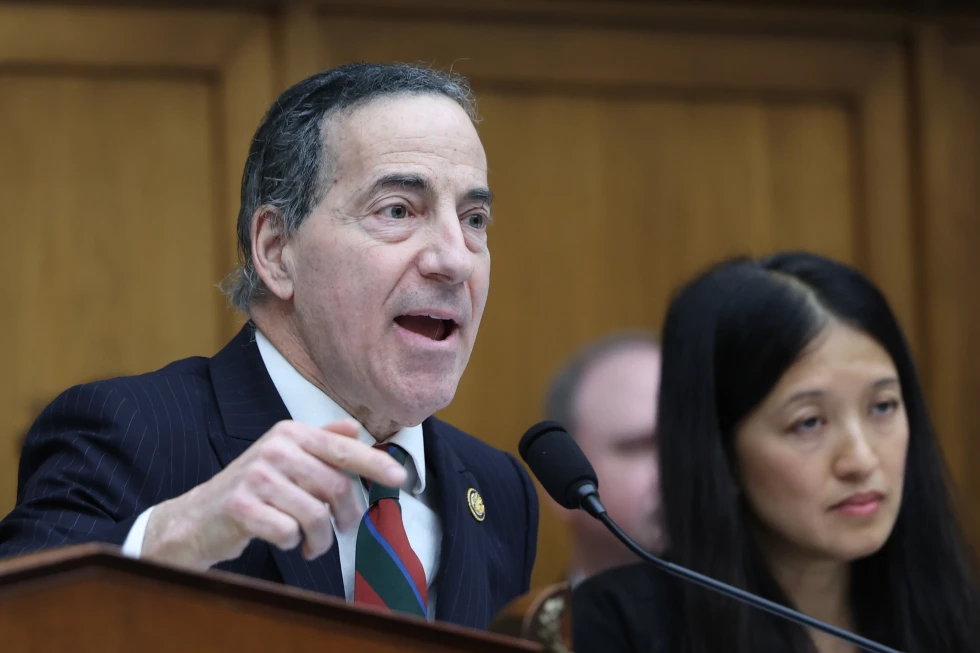
Representative Jamie Raskin, the ranking member of the House Judiciary Committee, formally submitted a request to the Justice Department’s inspector general for an investigation into what he described as spying on members of Congress. This inquiry comes on the heels of Congressional members reviewing less-redacted versions of the Epstein files at a departmental facility.
Visual evidence captured during Attorney General Pam Bondi's appearance before the House Judiciary Committee earlier this week showcased her displaying a binder which included the note “Jayapal Pramila Search History,” listing documents reviewed by Congresswoman Jayapal, another committee member actively questioning Bondi about the handling of Epstein’s files.
“This is totally unacceptable,” Jayapal expressed, asserting that lawmakers would be “demanding a full accounting” regarding how the department manages search history data.
Raskin further exacerbated these concerns in a statement, highlighting that not only have records been withheld from lawmakers, but it appears Bondi's team is also spying on Congressional members conducting essential oversight. He called for an immediate halt to tracking searches of Congress members while urging the DOJ to provide more access to the Epstein review for senior congressional staff.
A bipartisan group of lawmakers have engaged in the review of records in recent days, yet there have been frustrations regarding the excessive redaction of information related to Epstein’s associates. The Department of Justice had previously announced a release comprising over 3 million pages alongside over 2,000 videos and 180,000 images connected to Epstein investigations.
Justice Department representatives did not respond promptly to inquiries regarding the allegations. The inspector general's office also opted out of commenting on the matter.
In conclusion, Raskin indicated that openness, especially regarding the critical issue of survivors’ information, was paramount, insisting that all documents must be shared in compliance with federal law.