Early reports indicate that the pilot of a US F-15 fighter aircraft downed over Iran was rescued - which, if confirmed, would be the latest in the long history of US combat search-and-rescue missions over decades. The search operation is ongoing deep inside Iran for a second crew member, according to CBS, the BBC's US partner.
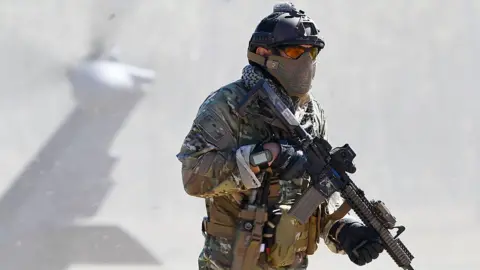
Combat search and rescue (CSAR) missions are considered among the most complex, time-sensitive operations that US and allied militaries prepare for. In the US, elite units of the air force are specially trained for CSAR missions and are often pre-emptively deployed near conflict areas where aircraft could be lost.
Put simply, CSAR missions are military operations aimed at finding, aiding and potentially rescuing personnel in need, including downed pilots and isolated troops. Unlike conventional search-and-rescue efforts, which could take place during humanitarian operations or after disasters, CSAR missions occur in hostile or contested environments.
The former commander of a pararescue jumpers squadron stated that a rescue operation like the one reported in Iran would involve at least 24 pararescue personnel scouring the area in Black Hawk helicopters, prepared to jump from planes if necessary. Upon locating them, they would deliver medical aid, evade enemy forces, and reach a safe extraction point.
Verified video footage showed US military helicopters and at least one refueling aircraft operating over Iran's Khuzestan province. Iranian officials have urged citizens to locate the missing US crew member, offering rewards for their capture, which would provide Iran with a significant bargaining chip.
The missions are extremely time-sensitive, as enemy forces are likely deployed in the area to find the same personnel. Consequently, strategies and planning play a key role in the success of these operations.