US President Donald Trump has issued a typically strongly worded statement in the wake of attacks on a major gas field shared by Iran and Qatar on Wednesday.
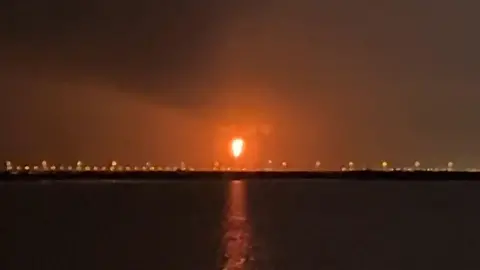
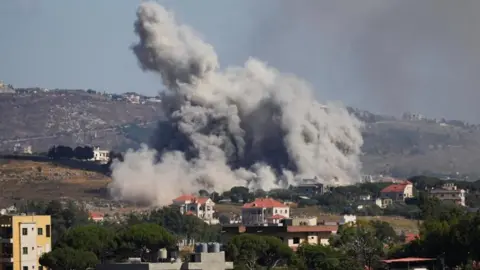
Israel hit Iran's South Pars - part of the world's largest natural gas field – and Tehran retaliated by striking an energy complex in Qatar. The attacks led to a spike in energy prices and fueled Trump's wrath.
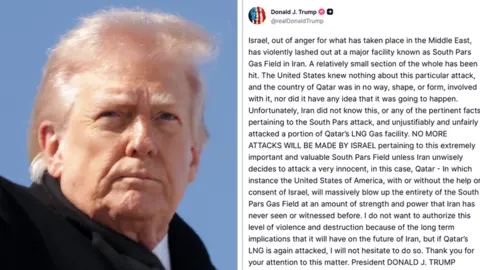
On his Truth Social media platform, Trump threatened Iran again and said he didn't know about Israel's plans for the attack.
So what does the language used by the US president tell us about the course of the war and the extent to which the US and Israel are aligned on its strategy and goals?
Let's break it down.
The US 'knew nothing' about the attack
The president says the US knew nothing about this particular attack. This flies in the face of multiple newspaper reports in Israel in the aftermath of the attack.
The attack was coordinated in advance with the United States and… agreed upon between Prime Minister [Benjamin] Netanyahu and US President Trump, the centrist paper Yedioth Ahronoth reported.
Right-wing paper Israel Hayom goes further, saying President Trump discussed the upcoming Israeli strike in [Iran's coastal city of] Asaluyeh with leaders of three Persian Gulf states over the weekend.
As is often the case with the president's assertions, it is not easy to know where the truth lies.
His choice of words to describe the Israeli attack is also telling. Out of anger, he says, Israel violently lashed out against the gas field. This is the sort of language used to describe some of Iran's wilder retaliations - not a carefully considered military operation by a close ally.
Is Trump suggesting that Israel acted unwisely?
Israel will make 'no more attacks' on gas field
The president's use of capitals is notorious, but in this lengthy post, he resorts to all caps just once.
NO MORE ATTACKS WILL BE MADE BY ISRAEL pertaining to this extremely important and valuable South Pars Field, he writes, unless Iran unwisely decides to attack a very innocent, in this case Qatar.
For a president who needs to feel he's in control, was this a reflection of an undertaking already given, or a shot across Benjamin Netanyahu's bows?
As is often the case with Trump's stream-of-consciousness Truth Social posts, it's not easy to tell.
But it carries echoes of reports that Mr Trump was angered by Israel's attacks on Iranian oil depots earlier in the war.
So are Israel and American war aims diverging?
It would probably be a mistake to read too much into a single late-night post from President Trump. Israeli officials are keen to emphasize that the two countries are in lockstep, even if they occasionally, inadvertently, hint at gaps.
We are very much aligned on most or all of our goals regarding the Islamic regime in Iran, the IRGC [Islamic Revolutionary Guard Corps], their ballistic and nuclear programmes, Alex Gandler, spokesman for the Israeli embassy in London, told the BBC on Thursday morning. We want the same thing.
But while the two allies clearly agree on much, Israel has been much more consistent about its desire to see regime change in Iran.
Officials quoted in the Israeli media this morning have painted the South Pars attack as part of an ongoing effort to undermine the regime's authority.
The gas supply to citizens is being shut off, and that will bring the uprising closer, one official told Yedioth Ahronoth's Yossi Yehoshua.
Prime Minister Netanyahu has made no secret of his decades-long desire to topple the Islamic regime, which he – and many Israelis – see as intent on destroying the Jewish state.
While the US has concentrated much of its military effort on degrading Iran's missile and drone capability, sinking its Navy and, in recent days, attacking targets along Iran's long Gulf shoreline, Israel has gone to great lengths to assassinate Iran's leaders and attack elements of state control, including paramilitary Basij units responsible for much of the violent crackdown on protests earlier this year.
Iran 'did not know' facts about attack
In his post, President Trump insists that Qatar was neither involved nor had any advance knowledge of the attacks.
But unfortunately, he writes, Iran did not know this before retaliating unjustifiably and unfairly.
Trump is certainly not letting Iran off the hook here, but he does appear to suggest that Iran did not know the full picture when it struck back - that Tehran may, erroneously, have thought Qatar was involved.
Threat to 'massively blow up' Iran's gas field
Parts of the Truth Social post are classic Trump - threats to use unprecedented levels of violence to get his way.
If Iran attacks Qatar's LNG [liquefied natural gas] facilities again, he warns, the US with or without the help or consent of Israel, will massively blow up the entirety of the South Pars Gas Field at an amount of strength and power that Iran has never seen or witnessed before.
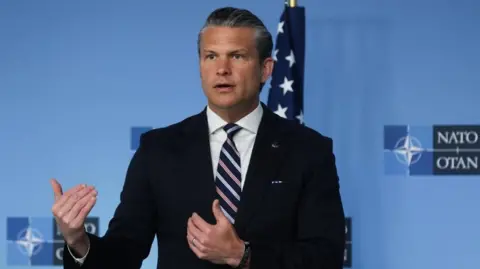
Trump and his combative Defence Secretary Pete Hegseth are fond of such bombast. Donald Trump, the self-styled president of peace, frequently deploys this kind of rhetoric.
And it is certainly true that Washington could inflict infinitely more damage on Iran – and its people – than it has already.
The reference to Israeli consent for threatened action is jarring.
Was this a rebuke to Benjamin Netanyahu to consult more closely in the future?
With elements of Donald Trump's Maga movement [Make America Great Again] already convinced that it is Israel, not America, calling the shots in this war, there is a risk that some of the president's critics might see this as an unfortunate Freudian slip.
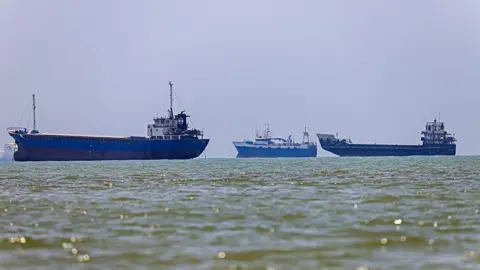
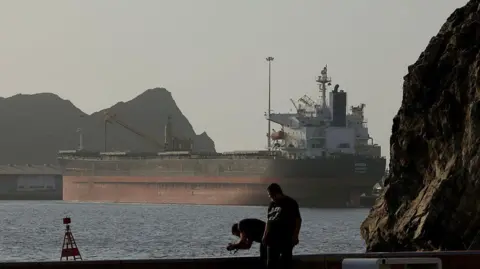
But with oil and gas prices rising again, thanks in part to the latest tit-for-tat attacks between Israel and Iran, and little obvious sign of progress in efforts to secure shipping through the Strait of Hormuz, Donald Trump sounds impatient.
This war continues to throw him curve balls, which the administration does not appear to have anticipated.
Support for the war, still sky-high in Israel, is far less pronounced in the US. The conflict could help secure another term as prime minister for Benjamin Netanyahu, while costing Donald Trump's Republican Party in November's midterm elections.
Israel and the US are close military allies, but this is the first time they have fought a war together.
It is proving more complicated than Donald Trump thought.