Gen Z Activism in Bangladesh: A New Political Order or More of the Same?
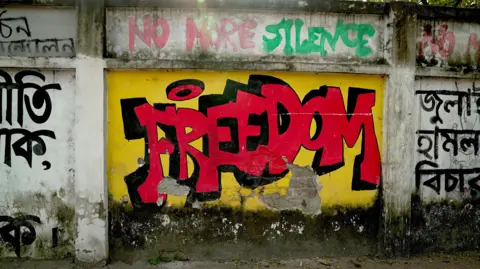
In 2024, a youth uprising in Bangladesh culminated in the quick downfall of Prime Minister Sheikh Hasina, marking what many believed to be a transformative moment for the nation. Young activists, particularly from a newly formed party, the National Citizen Party (NCP), took center stage during the protests that echoed through Dhaka's streets.
Rahat Hossain, a 24-year-old activist, recalls the chaos of the protests, where he risked his life attempting to rescue his friend from police gunfire. Tragically, Bhuiyan, the friend he tried to save, was later pronounced dead. This violence ignited a passion among the youth for change, leading to mass demonstrations that ultimately expelled Hasina’s government.
As elections approach, however, the euphoria of revolution has dulled into uncertainty. The NCP, despite its initial promise, is showing signs of fracture, and the voices of women within the movement largely go unheard. The looming presence of established parties, notably Jamaat-e-Islami, threatens to overshadow the young leadership’s aspirations.
Hossain and his peers initially rallied against governmental quotas in civil service jobs; their protests transformed into a collective demand for an end to autocratic governance. However, the new interim government—formed without a clear indication of women's representation—has compounded feelings of disillusionment among many young activists. Female leaders within the NCP, like Shima Akhter, express their frustrations regarding the sidelining of women, even as they remain critical of the alternatives presented by mainstream political players.
The NCP's decision to align with Jamaat-e-Islami, an Islamist party with a contested history linked to the country’s independence movement, raised eyebrows and sparked debates on ideological integrity. Critics argue that this compromise could alienate Gen Z voters who yearn for progressive reforms rather than the return of traditional political crimes.
As Bangladeshnears another pivotal election, it is clear that the path forward is fraught with challenges. The youth activism that once promised a departure from dynastic politics now seems threatened by the same structures they sought to dismantle. Will the new generation manage to hold onto their voices in this intricate web of alliances? All eyes remain on the upcoming elections, where every vote counts in determining if Gen Z's revolutionary fervor can translate into lasting change.