In brief
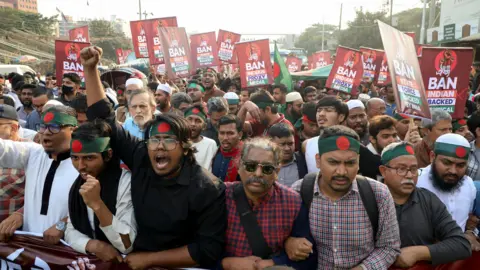
The political landscape in Bangladesh is shifting as youth grow increasingly disillusioned with India's influence and perceived support of former Prime Minister Sheikh Hasina's authoritarian regime. Graffiti and protests reflect a deepening rift, with many students advocating for a national identity independent of India's dominance. This sentiment, coupled with longstanding grievances over democratic erosion post-2014, poses significant challenges for Indo-Bangladeshi relations as the country heads into its first true electoral challenge since 2008.
The walls of Dhaka University are alive with voices of anger and rebellion. Graffiti narrates the frustrations of a new generation, harkening back to the July 2024 uprising which ousted Sheikh Hasina—a leader once revered as a pro-democracy champion but later viewed as increasingly authoritarian. Residing in India following her fall, her absence continues to shape the political discourse.As students prepare to cast their votes for the first time, graffiti and slogans such as 'Dhaka, not Delhi' articulate an assertive stance against India's historical dominance in Bangladesh's politics. The youth are vocal about their perception of India as a meddler in their country's affairs, especially after the contentious elections fueled by Hasina's authoritarian policies, which Delhi seemingly endorsed.Nobel laureate Muhammad Yunus has tried to bridge these divides since taking power, yet the Awami League's exclusion from elections highlights the precariousness of current governance. This political atmosphere is charged with anti-Indian sentiment, intensified by the belief that India supported Hasina's oppressive regime.Mosharraf Hossain, a sociology student, expresses the grievances of his peers by questioning India's role in Bangladesh's democratic erosion, marking a sharp decline in mutual trust between the two neighbors. Analysts underscore that India's inability to recalibrate its diplomatic strategies following Hasina's ouster has left Bangladeshi youth feeling neglected and undervalued.Reports indicate an increase in cultural and economic tensions, exacerbated by perceptions of India's insensitivity towards Bangladesh's territorial sovereignty, particularly in water-sharing conflicts and security issues involving border killings.With India needing to engage both the state and grassroots sentiment proactively, the path to recovery in bilateral relations requires a genuine commitment to respecting Bangladeshi aspirations over merely supporting favored political entities. Despite the current chasm, the relationship remains complex and multi-layered given historical ties, cultural connections, and geographical realities, leading some to believe that with sincere efforts, a constructive relationship can still emerge.