In brief
The artificial Christmas tree industry is navigating new challenges as tariffs raise prices and shift consumer preferences towards fake trees. Companies like Lee Display and Balsam Brands face increased production costs and must adapt to ensure sustainability in their business practices. Despite the hurdles, the preference for pre-lit fake trees remains strong among U.S. consumers.
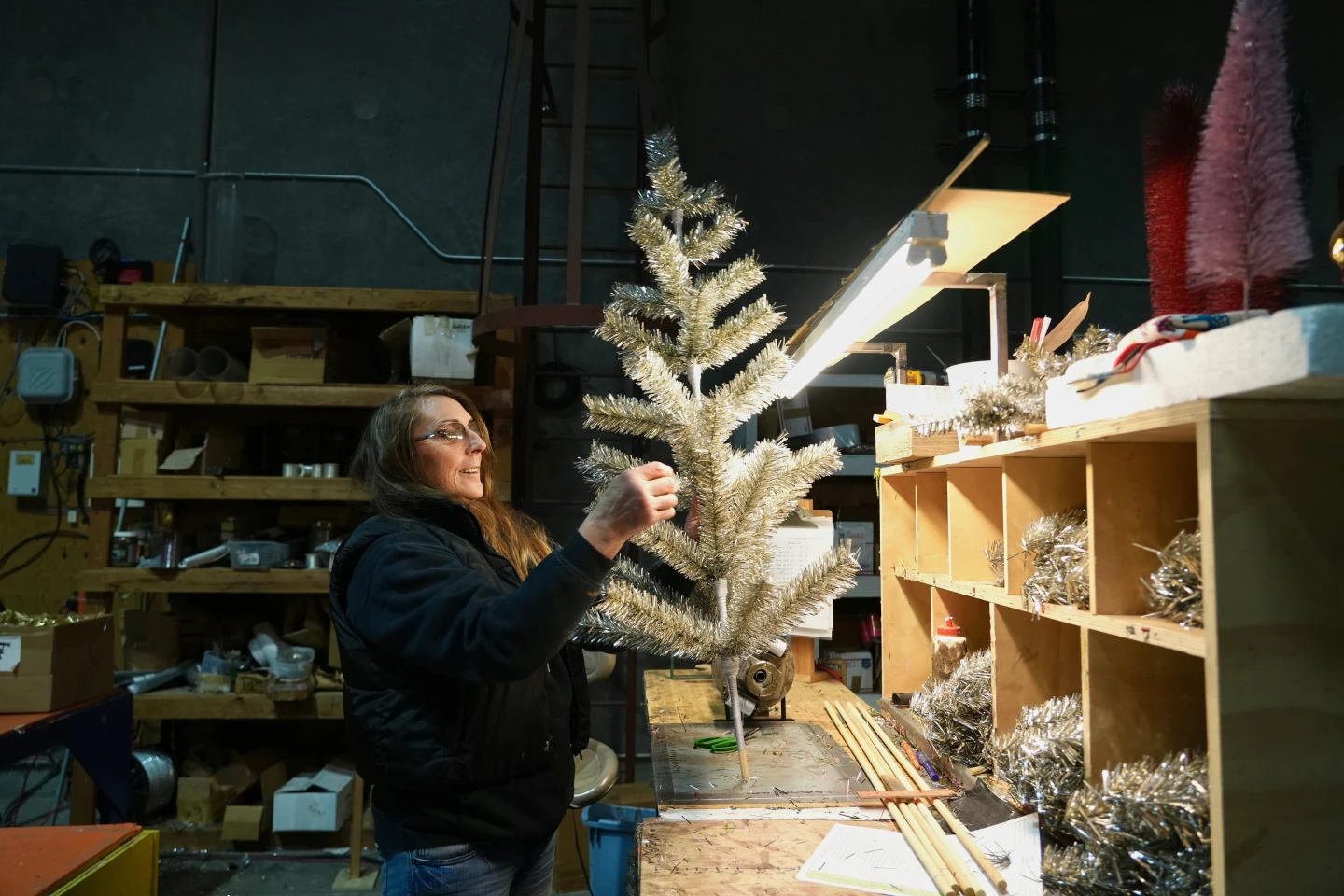
Recently, in Fairfield, California, Mark Latino and his team at Lee Display have been busy transforming sheets of vinyl into vibrant tinsel for festive Christmas trees. Latino, the CEO of a family-owned company founded in 1902, is part of a dwindling group of U.S. manufacturers that still produce artificial Christmas trees, making about 10,000 each year.
However, the industry is currently facing pressing challenges due to recent tariff policies. According to the American Christmas Tree Association, prices for artificial trees increased by 10% to 15% in the wake of new import taxes, causing some sellers to reduce orders and rethink their manufacturing strategies.
Manufacturers like the National Tree Co. are unlikely to shift their production back to the U.S. despite the tariffs. Chris Butler, the CEO, underscored that the production of these labor-intensive products often requires components that are currently not made in the U.S.
As U.S. consumers are becoming increasingly price sensitive, Butler pointed out that raising prices could significantly affect sales, demonstrating that merely branding an item as 'Made in the U.S.A.' won’t overcome cost barriers for many buyers.
Continued Popularity of Artificial Trees
Interestingly, consumer preference for artificial Christmas trees remains strong, with 80% of U.S. households intending to use fake trees this year. This trend has remained stable for over a decade, attributed in part to ease of setup and reduced allergies related to fresh trees.
Companies like Balsam Brands have also experienced a shift toward producing more convenient options, such as pre-lit trees. This feature is especially appealing to consumers who value the simplicity of having lights already installed.
Yet, with labor costs being a significant issue—especially for tasks like stringing lights—many manufacturing operations have moved overseas. While some companies are diversifying their supply chains to reduce reliance on China, tariff fluctuations still strain operations and profitability, impacting demand and pricing strategies.
Sustainability and Control
Despite these hurdles, small manufacturers like Lee Display take pride in their ability to respond quickly to market demands. Latino notes that creating products with local labor offers a level of control and oversight that is often lost with overseas production.
As the holiday season approaches, the industry is bracing for a potentially less merry Christmas, spurred by economic anxieties and consumer reluctance to spend on holiday décor.