In brief
The body of Indian mountaineer Dorje Morup, famously called ‘Green Boots’, has lain frozen at 8,500 m on Everest for three decades. Indian authorities are converging on a costly high‑altitude rescue to bring his remains home, a feat that will test both human endurance and logistical precision. The mission involves climbing the perilous northern route, avoiding crevasses and extreme cold, and moving the body to a helicopter‑deployable altitude. Personal stories from Morup’s wife and an Olympic‑style team of Sherpas highlight the emotional stakes, while the effort underscores the increasing environmental challenges on the Himalayas, such as melting ice and shifting weather patterns. If successful, the recovered body will undergo DNA confirmation before a dignified ceremony in Ladakh.
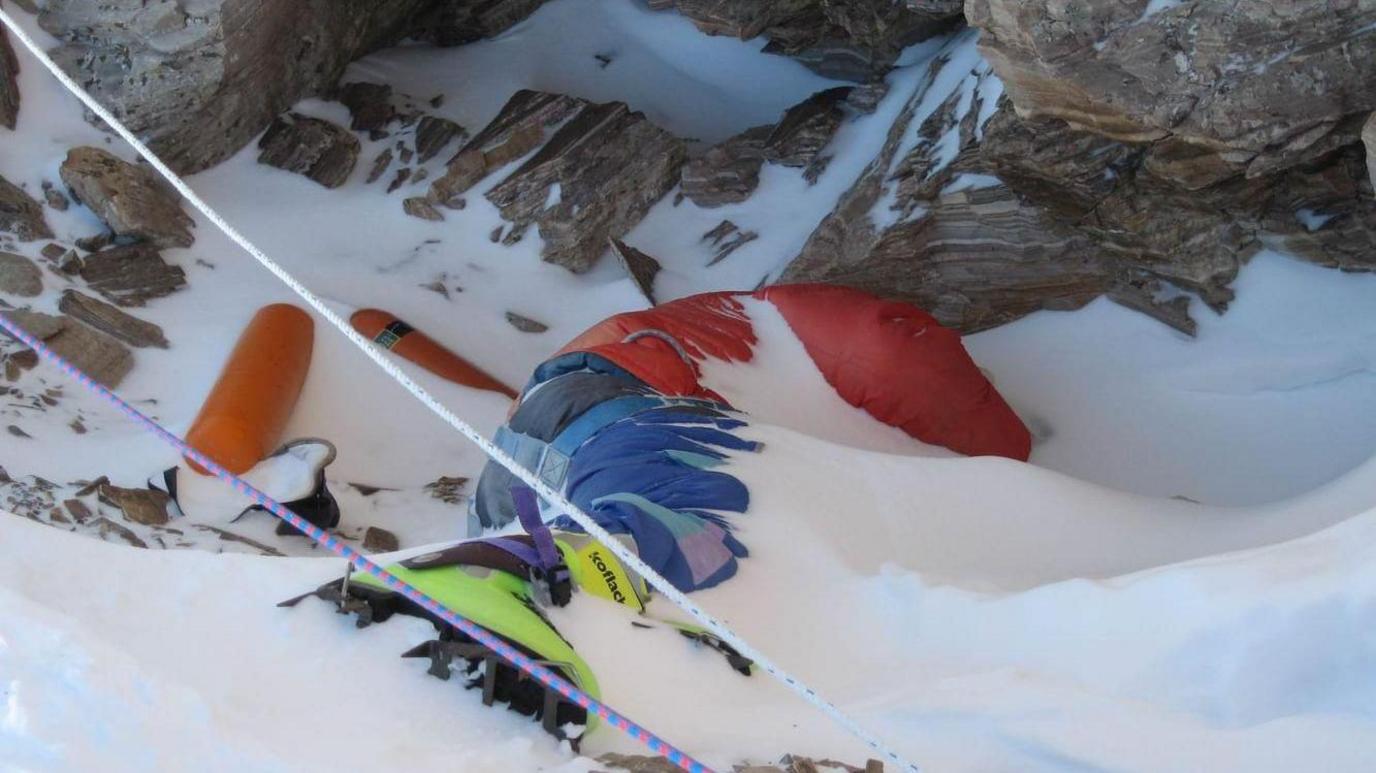
The silhouette of a climber’s body, cloaked in green mountaineering boots, has been a silent marker along the last stretch of the summit route for thirty years. The figure, known only as the ‘Green Boots’, was found in 1996 by a Japanese expedition on the northern side of Mount Everest after a snow‑drift burying its carcass beneath an overhanging rock. Over the decades the original identity of the body was unclear, but recent interviews with surviving expedition members and analysis of the body’s gear have identified it as Dorje Morup, a lance corporal of the Indo‑Tibetan Border Police who had successfully summited with a Chinese government certificate dated 10 May 1996.
India’s border security forces are now hiring a specialist high‑altitude rescue team, hoping to lift the body from the death zone and transport it to a lower altitude where a helicopter can pick it up. The Chinese side of Everest, where the body lies, is steeper, has fewer fixed ropes, and offers no helicopter support, raising logistical hurdles beyond those on the more frequently used Nepalese side.
The incident that ended Morup’s life began with a tragedy on the descent. Out of six climbers who had climbed all the way to the peak, three – Morup, Tsewang Smanla and Tsewang Paljor – left the summit during a freak blizzard, never to return. While the other two were later found and moved to lower camps, the body of the ‘Green Boots’ remained permanent in the snow, becoming both a memorial and a stark reminder of mountaineering risks.
Recovering a body at 8,500 m is a grueling task. Sherpas say crevasses, rockfall, and the sheer lack of oxygen make the ascent exponential in difficulty. The initial 1,000 m of descent, which might simply involve a managed trigger rope on a more accessible southern slope, must instead be negotiated by at least 10–12 climbers who can lift the heavily wrapped, ice‑bound body to a spot suitable for helicopter extraction or a yaks’ pack. The body itself may weigh several times a human’s normal weight because the gear is encased in ice, making downward transport a micro‑tremendous physical strain. Once on lower altitudes, thawing can accelerate decomposition – a tragedy the women of Morup’s family wish to avoid.
The ITBP has set an ambitious target of returning the remains by September 2026, and it is circling for a team of experienced Sherpas who have conducted earlier recoveries. In 2025 a similar mission moved French climber Francys Arsentiev’s remains from the “Sleeping Beauty” location to a less exposed spot after a decade of presence on the mountain. Yet those operations were comparatively simple; the cost now estimates to range from $40,000 to $80,000, a budget beyond individual families and requiring communal backing.
In the meantime, the family remains split on the emotional significance. Yangskit, Morup’s wife, explains, “My heart refused to believe he had died. I could not accept he was gone because I had never seen the body.” Her son, Punchok Dorjai, views the recovery as a way to honour his father’s martyrdom: “We plan to hold a funeral near Leh’s Martyrs Park and keep the Green Boots as a symbol of his legacy.” The old photos, medals and the Chinese summit certificate are the only remaining trophies in the house, underscoring the poignancy of the situation.
The Everest “Green Boots” story also shines a light on the rapidly changing Himalayan environment. Climate science shows the region’s glaciers are retreating, leading climbers to face altered snow patterns and sometimes unexpected avalanche risk. The recovery mission is a reminder that the human stories intermingled with environmental change are as urgent as the clearest scientific data: each expedition, each team, is inextricably tied to the mountain’s fragile ecological footprint. The successful extraction of Dorje Morup’s body will be both an emotional closure for his family and a testament to the capabilities of high‑altitude rescue teams in the context of a warming planet.