In brief
The article follows a little girl at Columbia Heights Public Schools who felt safe touching Sage, a goldendoodle brought in for therapy. It explains how the school’s social worker, Nicole Herje, and health experts guide traumatized children who survived mass arrests, deportation and the loss of family members. The story quotes research illustrating how early childhood trauma reshapes the brain, outlines statistics on millions of U.S. children with parents in mixed‑status families, and details how Valley View’s interventions—from virtual classes to in‑school group therapy—are helping students re‑enter the classroom in a safe and healing environment.
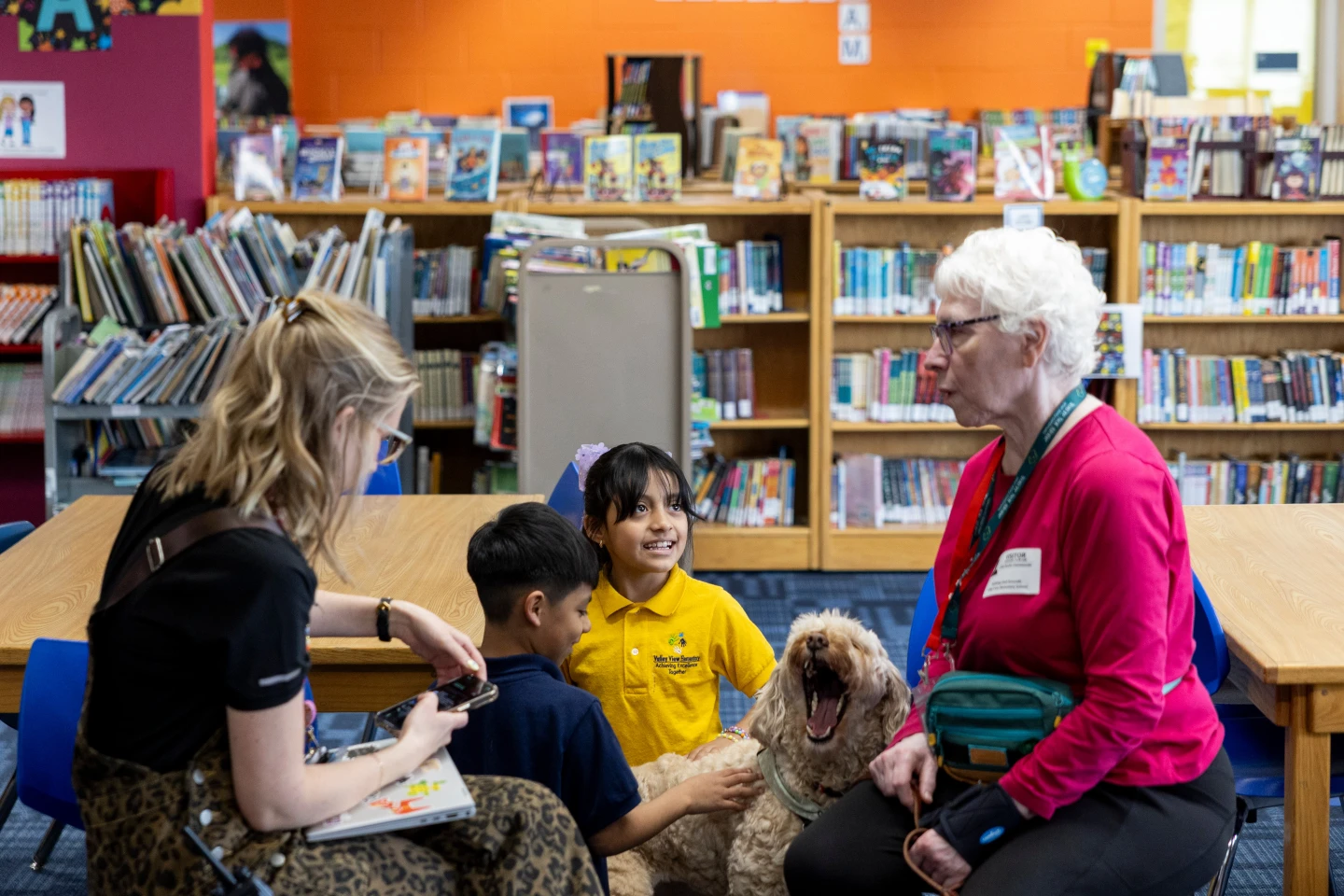
In a quiet corner of the library at Valley View Elementary in Columbia Heights, Minnesota, a little girl tugged at the soft, golden coat of a therapy dog named Sage. Social worker Nicole Herje leaned in, gently asking, “How does it feel when you pet Sage?” The child smiled, recalling a similar experience back home in Ecuador. Sage is no ordinary mascot; she is part of a larger strategy to heal the emotional wounds of children who have lived through the surge in immigration enforcement that rattled the Twin Cities in 2018. With institutional arrests in the thousands and a wave of helicopter‑fueled sweeps, attendee numbers at Valley View’s classes plummeted as families kept their kids home for safety.The therapy dog’s presence is meant to counter the lasting trauma that can cripple a young mind. Research from early‑childhood advocate Zero to Three shows that sustained stress rewires the brain’s structure, turning fear into a default state. “A child who experiences repeated, violent loss,” explains Rebecca Parlakian, senior director of programs, “ends up rewiring himself for survival, and the changes are subtle enough that even three‑year‑olds can feel it.”Dr. Robyn Tabibi, a family physician based in St. Paul, recalled a tres‑year‑old boy who stopped eating and became listless after the family moved to avoid a possible arrest. Similarly, psychologist Sarah Anikpo, husband of a newly naturalized citizen, saw his nine‑year‑old son, Zeke, grow anxious and unable to sleep in his own room after a local ICE officer fatally shot a U.S. citizen in their neighborhood.Even among students in families with no direct immigration ties, the looming threat of raids created “anticipatory anxiety,” a term the Brookings Institute has used to describe the psychological strain on children of mixed‑status families. The Institute estimates that more than 4.6 million U.S. children live with at least one parent who is undocumented or holds a temporary status, and over 200,000 have parents who were detained or deported in the Trump era.During class, Herje led a small group on a “emotions tour” that read from *The Color Monster* to help students name sensations. “When you’re happy, you laugh and dance and want to share that joy,” she noted, prompting a girl to share that she feels happy simply when she can go back to school with friends. The children responded with shared tears, cartwheels and skyscraping descriptions of what made them sad—profusions of family memories and quiet loneliness.Valley View’s staff identified four students that required added help, including two fifth‑graders and a second‑grader, both of whom had spent nights at Texas’s Dilley Detention Center. Herje ran groups that alternated the gentle presence of Sage with guided discussions. “When they see that a dog is friendly, they’re more open to talking,” she says. Some children even cried openly, hoping their classmates could feel their fear; others slammed disbelief at their friends for praying for a grandmother who had returned to Mexico.Many of the students’ parents came from remote parts of Mexico and Central America, thrust into an American reality that still felt foreign. The teenagers who have been trapped between two worlds report an increased sense of dread whenever they hear the motorcade of ICE vehicles through town. Smith, director of the school’s mental‑health partnership, stresses that “returning to school” is not just recapturing academics—it is the act of re‑claiming a sense of belonging.In the days after schools reopened, many students re‑connected in more intimate ways. A young girl who is still nervous about the future told the group that feeling loved meant having a best friend beside her. Herje recorded the moment, not to celebrate individual triumph but to remind the whole school that compassion—whether from a human therapist or a golden‑finned dog—can bring children forward.Valley View’s approach is replicable and the hopeful model for districts across the nation, especially those that need to grapple with the after‑effects of a politicized immigration policy that still reverberates in students’ lives.—Balingit reporting from Washington.