In brief
World leaders express deep concern over US President-elect Trump's insistence on the strategic importance of Greenland, raising fears of territorial aggression.
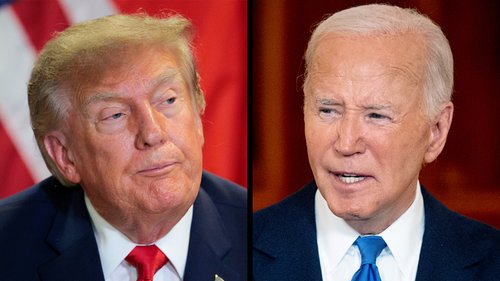
In the wake of Donald Trump’s declarations regarding Greenland, Germany and France have issued strong warnings against any threats to take over the Danish territory. Trump has previously referred to the arctic island as "critical" to US national and economic security, suggesting military force could be an option to seize the area. Chancellor Olaf Scholz of Germany emphasized the importance of respecting national borders, stating, "the principle of the inviolability of borders applies to every country, no matter whether it's a very small one or a very powerful one." French Foreign Minister Jean-Noël Barrot added that the European Union would not allow other nations to threaten sovereign borders. This declaration came after Trump reiterated his interest in Greenland during a news conference, saying it was vital for America’s military and economic interests. Denmark, which governs Greenland, firmly maintains that the territory is not for sale, stressing that the local populace must dictate its future. Greenland's Prime Minister Mute Egede has also pushed for independence from Denmark, rebuffing the notion that the territory is open to acquisition. In light of Trump’s remarks, both Scholz and Barrot expressed incredulity, with Barrot mentioning the possibility of a new era defined by competition and aggression, yet urging EU solidarity to maintain strength against external pressures. Greenland, an autonomous territory with a population of just over 57,000, holds vital rare earth mineral resources essential for advanced technology. Despite aspirations for independence, there remains a heavy reliance on Denmark for economic support and security services. Reports indicate that many Greenlanders were taken aback by Trump’s comments, with a desire for constructive engagement with international partners rather than becoming a pawn in geopolitical strategies. Danish Prime Minister Mette Frederiksen reaffirmed that "Greenland belongs to the Greenlanders," insisting that local discussions and decisions reflect the island's future interests. The backdrop of this diplomatic tension raises the stakes for international relations as Trump officially begins his second term on January 20. With ongoing geopolitical shifts, the emphasis on cooperation and respect for territorial integrity remains paramount in the face of such provocative rhetoric.