In brief
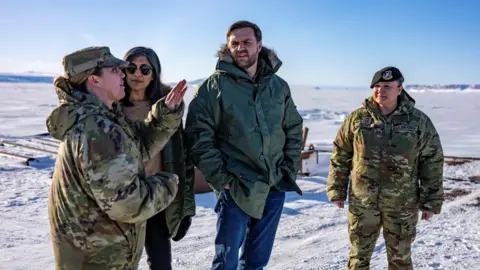
Greenland is on edge as US Vice President JD Vance hosts discussions with Danish and Greenlandic leaders over the island's future, amid fears of US territorial expansion. Residents express a desire for independence, with sentiments shared about not wanting to be 'for sale' to the US. The geopolitical tension has broader implications for NATO and international relations, especially concerning Russia and China.
The United States is set to host pivotal discussions regarding Greenland's political future, drawing deep concern from its residents about potential territorial claims by the Trump administration. As the spotlight shines on this largely autonomous territory of Denmark, local voices emphasize their desire for sovereignty and cautious independence.Greenland's capital Nuuk is buzzing with energy from a digital ticker streaming the words 'Trump', 'Greenland', and 'sovereignty' in bright red letters, signifying the urgency of the situation. Amelie Zeeb, a local, asserted, 'We are not for sale. Our country is not for sale,' highlighting the prevalent concern regarding the attachments that could come from US interests in the island.With President Trump asserting a need for the island for US national security amidst rising global tensions, Greenlanders are wary of their fate. The upcoming meeting will address these critical issues, and many locals, including artists and young families, are expressing their worries for the future of their homeland. Indigenous sentiment leans heavily towards maintaining their cultural integrity and independence, as echoed by Sivnîssoq Rask, an Inuit writer who desires a well-managed, independent piece of land.The impact of this dialogue, however, transcends the fate of Greenland alone. Political tension among NATO allies—especially Denmark— is rising, as the Danish Prime Minister warns of serious international fallout should the US impose control over the island. With NATO discussing bolstered military presence in the Arctic, especially against perceived threats from Russia and China, the strategic dialogue around Greenland is set against a backdrop of geopolitical rivalry.The meeting will be pivotal: with strong stances from both Greenlanders and Danish officials, how the US engages could determine the territory's security and autonomy for years to come. While the prospect of US military investments sound reassuring, many Greenlanders are keen on the nation charting its own course in an increasingly uncertain geopolitical climate. Residents hope this week's negotiations will consider their sovereignty rather than propose a controversial commodification of their land.