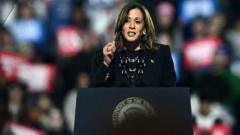
In a stunning turn of events, Kamala Harris's presidential campaign culminated in a decisive defeat against Donald Trump, raising questions about her effectiveness as a candidate and the strategic choices made throughout the race. While campaigning to connect with American voters on issues surrounding abortion rights and economic troubles, Harris's performance during interviews, notably on ABC's The View, sparked controversy—most notably her response to differing from President Biden's policies, which she claimed she couldn't pinpoint. This remark amplified criticisms and became fodder for Republican narratives.
Conceding the election late Wednesday, Harris addressed supporters and encouraged resilience in the face of disappointment, yet the campaign’s unraveling raised immediate concerns within the Democratic Party about its president's legacy and future direction. Her campaign manager described the loss as "unfathomably painful," reflecting the disillusionment and surprise among campaign staff who had anticipated a tighter race.
Despite a promising start with viral momentum and high-profile endorsements, Harris found herself unable to break free from Biden's unpopular presidency, consistently marred by low approval ratings. Many within her inner circle debated whether her steadfast loyalty to Biden hindered her appeal to voters craving change. Jamal Simmons, a former communication director for Harris, characterized this loyalty as a "trap" that limited her ability to distance herself from Biden without open confrontation.
Voter surveys indicated that economic anxieties significantly affected the election outcome, with increasing concerns over personal finances and immigration policies. Harris's strategies to revive working-class support and energize base demographics fell flat, showing losses among Latino and black voters, as well as young participants in the electorate—key groups that previously leaned towards Biden in 2020.
As the campaign neared its end, Harris's messaging pivoted towards painting the election as a critical choice against Trump, while neglecting to articulate her own vision. According to political analysts, this focus on attacking Trump over introducing her own policies was a significant strategic error. Veteran pollster Frank Luntz remarked that while voters were well aware of Trump's persona, they were left questioning Harris's plans and policies, which were overshadowed by her Trump's rhetoric.
The failure to galvanize support from independents and suburban women, coupled with a misjudgment of voter sentiment towards Trump’s past actions, revealed deeper issues within the Democratic framework. This election serves as a wake-up call for the party, signifying that the discontent expressed in Harris's loss signifies more than just the failure of a singular campaign—it reflects pervasive discontent with the Democratic Party’s trajectory and its approach to governance.
As the aftermath unfolds, the implications for both Trump and Harris resonate beyond the immediate electoral outcomes, influencing national conversations on leadership, policy, and electoral strategies moving forward.