In brief
The International Atomic Energy Agency cautions that Iran's ongoing uranium production poses significant risks, as efforts to curb nuclear armament face growing unease.
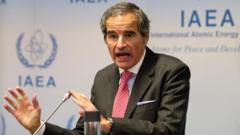
Rafael Grossi, director general of the International Atomic Energy Agency (IAEA), has raised serious concerns about Iran's decision to significantly ramp up uranium enrichment, which is now being produced at 60% purity. This level is alarmingly close to the threshold required for nuclear weaponization. Discussing the matter in a recent BBC interview, Grossi emphasized that this development is "very worrisome," and suggested it reflects Iran's response to setbacks in military and diplomatic arenas, particularly in Syria, Lebanon, and Gaza.Despite the escalating enrichment efforts, Grossi noted that some Iranian politicians have advocated for the development of a nuclear weapon. However, after recent discussions in Tehran, he expressed optimism that the current leadership does not favor this path. Speaking at the Manama Dialogue in Bahrain, Grossi cautioned Israel against taking military action against Iran's nuclear facilities, warning of severe retaliation and potential global radiation threats.The IAEA's latest report unveiled that Iran is significantly increasing its production of uranium at its Fordow facility, which involves feeding partially enriched uranium into more centrifuges. This change could elevate uranium production to about 34 kilograms monthly, a stark increase from previous outputs. The IAEA has urged for stringent monitoring measures at this site to ensure compliance with declared enrichment levels, amidst Iran denying any intentions for military nuclear capabilities.Grossi highlighted that the growth of Iran’s nuclear program over the past decade has substantially altered the landscape, suggesting that within a short period, Iran could amass enough material for a nuclear device, should it choose to do so. He reiterated the need for caution, emphasizing that military options could lead to catastrophic outcomes, given that much of Iran’s nuclear infrastructure is deeply fortified.In light of these developments, Grossi indicated that the global nuclear non-proliferation framework is under increasing pressure, as nations reconsider their nuclear stances in a more volatile geopolitical environment. With established nuclear states modernizing their arsenals, there is a rising discourse among other nations about pursuing their nuclear ambitions for security. As the international community monitors these precarious dynamics, the stakes in evolving nuclear discussions remain critically high.