In brief
Researchers found that mummified bodies over 5,000 years old maintain pleasant "woody," "spicy," and "sweet" scents. This discovery showcases the significance of smell in ancient Egyptian mummification while offering new opportunities for conservation efforts in museums.
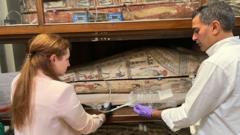
Researchers from UCL and Slovenia's University of Ljubljana have revealed an intriguing discovery: ancient Egyptian mummies, even after 5,000 years, still emit inviting fragrances. The team examined nine mummies and identified their scents to be described primarily as "woody," "spicy," and "sweet," albeit with varying intensities. Cecilia Bembibre, one of the lead researchers, announced that they aim to recreate these olfactory experiences for visitors at the Egyptian Museum in Cairo.The ancient mummification process incorporated the presence of fragrant oils, waxes, and balms, as these pleasant odors were crucial for guiding spirits into the afterlife. Dr. Bembibre remarked on the contrast to popular culture which often portrays mummies repelling odors. Intrigued, the team undertook a non-invasive method to extract smells from within the sarcophagi without disturbing the remains, employing a specialized tube.The opportunity to experience ancient Egypt through scent provides a captivating addition to our understanding of the civilization, according to Ally Louks, an expert on the politics of smell at the University of Cambridge. She described this innovative approach as stirring a strong emotional response and a unique engagement with historical narratives. Furthermore, Matija Strlič, a study co-author, mentioned that the scents could even indicate a mummy's social status. This novel olfactory research could hold implications for other museum collections and broaden the specter of sensory engagement in historical interpretation.Interestingly, the study's findings also have significant ramifications for mummy conservation efforts. By utilizing gas chromatography, researchers identified specific odors emanating from the breakdown of embalming fats, which may suggest the onset of decomposition. Such insights will allow conservators to develop informed methods for storing and wrapping mummies, ensuring their preservation for future generations, as expressed by Dr. Bembibre.