In brief
Following Serbia’s parliamentary election, North Macedonian Prime Minister Hristijan Mickoski and opposition leader Venko Filipce engaged in a heated exchange. Mickoski praised the new Serbian government, while Filipce accused the Macedonian administration of ties to Serbia’s Aleksandar Vucic and alleged corruption in the energy sector. The confrontation highlights regional political tensions and raises questions about how such disputes may impact energy policy and environmental outcomes.
After Serbia’s parliamentary election on October 25, North Macedonian Prime Minister Hristijan Mickoski and opposition leader Venko Filipce engaged in a heated confrontation that, while political in tone, also underscored alleged corruption in the energy sector—a domain directly tied to environmental stewardship.
Mickoski, who also leads the ruling VMRO‑DPMNE party, was among the first to congratulate Ilija Srdanovic, the leader of Serbia’s new Student Movement electoral list, which won the election. He said he expected “good neighbours” Serbia and North Macedonia to continue working “to increase economic cooperation.”
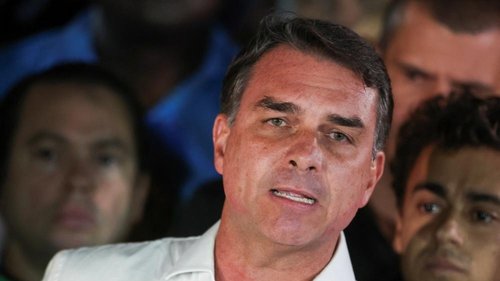
Meanwhile, Filipce, head of the opposition SDSM party, accused the Skopje administration of being linked to Aleksandar Vucic’s Serbian Progressive Party. In a press conference following the Serbian election, Filipce openly alleged that the North Macedonian government is implicated in “corruption schemes in the energy sector and through drug trafficking.” He further accused senior figures of having received instructions from Vucic, thereby suggesting a deepened entanglement between the two nations’ political elites.
Some people say we are celebrating foreign elections. No, we are celebrating the arrival of the wave of democracy here in the region, because these business, political, and media ties with Aleksandar Vucic and, until recently, with Viktor Orban are the ties that fuel, and have fuelled, our regime. They keep us captive, in a media blackout, and under a highly corrupt regime.
These accusations echo earlier claims that corruption has hindered reforms in North Macedonia’s energy infrastructure. The energy sector, encompassing state‑owned utilities and cross‑border pipelines, represents a pivotal arena for both economic development and environmental conservation. Corrupt procurement practices, bribery, and opaque funding streams can delay critical upgrades to power grids, environmental protection measures, and the integration of renewable technologies. Consequently, the political rhetoric surrounding these allegations may soon translate into real policy consequences.
Leaders of the ruling VMRO‑DPMNE party released a statement rebuking Filipce’s claims. They declared that “celebrating Aleksandar Vucic’s defeat as if we’d won the election and as if we hadn’t been good friends just yesterday.” The party reminded observers that the administration had historically honored Vucic, suggesting a continuity rather than blame. The statement underscored a dismissal of Filipce’s assertions, framing them as “insults, fabrications, and lies.”
The dynamics highlighted by this exchange are not confined to political drama; they carry tangible implications for environmental governance in the region. Energy infrastructure projects, which are increasingly set to incorporate green technologies, can suffer delays when corruption allegations surface. In turn, such delays can impede the transition to cleaner energy, hamper emissions reduction targets, and affect regional commitments to the Paris Agreement.
Environmental analysts note that the region’s energy sector has been earmarked for significant upgrades in forthcoming national strategies. The inefficiencies caused by alleged corruption can undermine investment in renewable energy, such as hydroelectric, solar and wind projects, which are integral to lowering greenhouse‑gas emissions. Moreover, the cross‑border nature of much of the infrastructure also means that political tensions can affect not only national policy but also multinational contracts and regulatory frameworks.
The public relations battle that erupted after the Serbian election also reflects a broader contest over regional narratives. Filipce claims that Skopje’s political ties to both Vucic and, earlier, Viktor Orban perpetuate a “highly corrupt regime.” This narrative challenges the integrity of state institutions and, by extension, the government’s capacity to devote resources to environmental protection. Strong governance mechanisms are widely regarded as essential to enforce environmental standards, manage public resources efficiently, and foster investor confidence in green initiatives.
Opponents of the ruling party argue that an open, transparent administrative environment is key to securing international funding for clean‑energy projects, political trust that is essential for countries seeking EU accession. Conversely, a stable relationship with neighboring Serbia might be leveraged to facilitate cross‑border green energy projects, such as shared renewable deployment or energy trading, provided corruption concerns are addressed. Political discourse that discredits such collaboration could discourage investment from the global green finance community.
The after‑effects of the exchange remain to be seen. As negotiations between political factions intensify, observers speculate about whether the current allegations will prompt formal investigations into energy contracts, or if they will remain a political watchword. Politicians on both sides must address the stark perception that their administrations are corrupted, or risk further alienating domestic and international partners essential for climate‑focused projects.
While the public dispute centered on political clout, the underlying complaint—corruption in the energy sector—has direct environmental ramifications. A transparent, accountable governance structure is essential for achieving thresholds set by the European Union in the region’s Consensus. The political climate in North Macedonia, judged by the intensity of rhetoric exchanged after Serbia’s election, could ultimately shape whether the country moves forward on its environmental commitments.