In brief
With Donald Trump’s resurgence in US politics, experts predict the return of aggressive tariffs that could reshape global trade dynamics. Concerns mount over inflation, stagnating growth, and the potential for recession as nations reliant on US trade await the unfolding impact of upcoming tariffs.
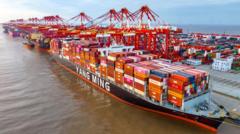
Amid rising tensions and economic uncertainties, the global economy finds itself at a precarious crossroads with the potential resurgence of Donald Trump in US politics. As the former president gears up for a potential return to the White House in 2025, experts are warning of a fresh wave of protectionist trade policies that could reverberate across the globe.According to the International Monetary Fund (IMF), economic growth in 2025 is projected to hover around a modest 3.2%. While a recent cut in interest rates brought temporary relief to American borrowers, it failed to boost stock markets as Federal Reserve Chair Jerome Powell indicated fewer future cuts may be on the horizon amid continued inflation struggles.Recent inflation rates, particularly in the US, UK, and eurozone, are reigniting fears about central banks' ability to reach target levels. The prospect of new tariffs imposed by a reinstated Trump administration looms large, creating an atmosphere of uncertainty that could hinder global growth. Luis Oganes, head of global macro research at JP Morgan, highlights that a return to isolationist policies could provide short-term support to the US economy while simultaneously damaging countries dependent on trade with the US, most notably Mexico and Canada. Maurice Obstfeld, a former chief economist at the IMF, warns that tariffs could disrupt the critical North American automotive supply chain, potentially leading to higher consumer prices and reduced investment.Concerns are also prevalent in China's economy as it continues to rely on exports of affordable goods. As tariffs threaten to inflate prices and decrease demand, the country faces numerous domestic hurdles. Nonetheless, optimistic forecasts from the World Bank suggest potential growth could reach 4.5% by 2025 if challenges, such as weak consumer spending and investment, are effectively managed.While companies explore diversifying their supply chains due to the ongoing trade tensions between the US and China, complete replacements for Chinese manufacturing remain impractical. Electric vehicles stand as a focal point of trade contention, as tariffs already imposed by the US and Europe may lead to further disputes and economic strain.In Europe, the threat of US tariffs adds complexity to an already fragile economic landscape, particularly for key players like Germany and France. Their economies have shown signs of stagnation, with persistent inflation and poor performance raising concerns that a sustainable recovery could be jeopardized if consumers don’t spend more and businesses refrain from increasing investments.As countries worldwide brace for the decisions that a potential Trump administration may impose, analysts remain cautious but hopeful that stabilization of inflation and interest rates can be achieved. However, they warn that the path forward heavily depends on the economic policies rolled out by the US. The global economy stands at a critical juncture, one where trade tensions and protective policies could reshape economic alliances and determine the health of international markets in the years to come.