In brief
Breyten Breytenbach, celebrated anti-apartheid writer and artist, has died at 85 in Paris. Known for his sharp intellect and commitment to justice, he left a profound impact on literature and human rights across the globe.
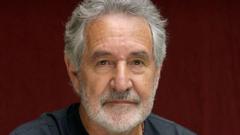
Breyten Breytenbach, a prominent figure in the struggle against South Africa's apartheid regime, has died peacefully in his sleep at the age of 85. His family, including his wife Yolande, was by his side in Paris. Remembered for his poetic brilliance and relentless activism, Breytenbach was described by his family as "an immense artist, militant against apartheid, he fought for a better world until the end." His contributions to literature and criticism of oppressive systems earned him admiration even during apartheid, with the British puppet show Spitting Image famously calling him "the only nice South African."Born on September 16, 1939, in the Western Cape, South Africa, Breytenbach grew up in a family of five and went on to study at the University of Cape Town. He actively opposed the apartheid regime through his involvement with the Sestigers, a collective of Afrikaans poets who aimed to critique and reform the narrative associated with their language, Afrikaans. Although Afrikaans was tied to the white ruling class, Breytenbach fought against its association with oppression while embracing its literary potential.In 1960, Breytenbach entered voluntary exile, primarily residing in Europe while continuing to denounce apartheid. His attempts to return home with his Vietnamese wife were thwarted by discriminatory immigration laws. In 1975, he was arrested during a covert return to South Africa, leading to a seven-year prison sentence. Despite his confinement, he remained defiant, producing significant literary works, including "The True Confessions of an Albino Terrorist," which recounts his harrowing experiences in prison.After his release in 1982, facilitated by then-French President François Mitterrand, he became a French citizen but did not shy away from criticizing South Africa's post-apartheid governance. Breytenbach condemned the African National Congress (ANC) for what he perceived as its eventual corruption.An outspoken advocate for human rights beyond South Africa, Breytenbach voiced his opinions on various global injustices, including the Israeli-Palestinian conflict. He published more than 50 books, many of which have been translated into different languages, and his surreal artwork often explored themes of confinement and freedom.Breytenbach's legacy is enduring, and he is survived by his wife, Yolande, daughter Daphnée, and two grandsons. His life was one of passionate resistance against injustice, leaving a lasting imprint on literary and activist communities worldwide.