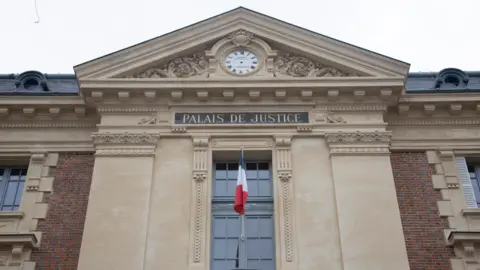
In an escalating political saga in France, the president of the National Rally (RN) party, Jordan Bardella, has made a compelling call for supporters to rally in central Paris this Sunday, mobilizing outrage against a court ruling that has banned Marine Le Pen from holding public office for five years. This ruling stemmed from her involvement in embezzling €2.9m ($3.4m; £2.5m) of EU funds during her tenure from 2004 to 2016.
Bardella emphasized that the French people should be incensed by the ruling, articulating his stance during a press conference held on Tuesday. With the Paris Court of Appeal announcing that it will aim to deliver a decision by the summer of 2026—well ahead of the 2027 presidential elections—Bardella urged for "democratic, peaceful, calm mobilisations." The first protest is slated to take place at Place Vauban, near the iconic Eiffel Tower.
Le Pen characterized the court's decision as a "nuclear bomb" aimed at undermining the RN's chances to achieve electoral success. In her remarks, she condemned the political manipulation allegedly behind the ruling and called for her supporters to channel their "outrage and hurt" into commitment for an eventual victory. This sentiment reflects a wider concern among the far-right about perceived judicial overreach with Bardella condemning the "tyranny of the judges."
Compounding the controversy, reports suggest that threats have been made against the judges responsible for the verdict, with security measures implemented to protect the presiding judge in the Le Pen case due to personalized attacks. Le Pen, who aimed to vie for the presidency for a fourth time, is facing a precarious political landscape as she grapples with the prospect of being sidelined for Bardella, who, despite his youth and inexperience, retains substantial support among RN voters.
Recent polls indicated that around 60% of RN supporters would favor Bardella over Le Pen for the presidential candidacy if he were to run, hinting at a shifting dynamic within the party. Opposition to the decision has extended beyond France, garnering support from several European leaders who echo Le Pen's claims regarding the implications for democracy.
In addition to her ineligibility ruling, Le Pen has received a mandatory €100,000 (£82,635) fine and a four-year prison sentence, with two years suspended—though this will not take effect until the conclusion of the appeals process, which could span multiple years. The ramifications of this case continue to reverberate across French and European politics, sparking intense debates on legal propriety, democracy, and the rising tide of the far-right in recent electoral climates.