In brief
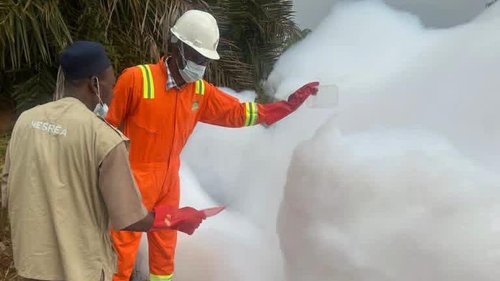
Strange blobs, resembling spongy masses, have appeared along Newfoundland's shores, sparking an investigation by both local researchers and Canadian authorities. Chemist Chris Kozak believes he has identified the blobs, which carry a petrochemical odor, although the environmental agency has yet to confirm any findings.
In September, beaches along Placentia Bay in Newfoundland became a scene of intrigue as residents reported the appearance of unusual white blobs, ranging from the size of a coin to that of a dinner plate. The local environmental agency stepped in to investigate the matter, yet no conclusions have surfaced thus far. Local chemist Chris Kozak, part of a research team from Memorial University of Newfoundland, took it upon himself to analyze these blobs after obtaining samples. His initial observations revealed a strong petrochemical scent reminiscent of turpentine, leading him to hypothesize that the blobs might be polyurethane, a material commonly associated with the fishing industry and boat insulation. However, this theory was quickly debunked when tests indicated that the blobs had a density greater than water, causing them to sink. In a deeper analysis, Kozak discovered that the chemical makeup of the blobs included carbon, hydrogen, and oxygen — yet notably absent were nitrogen and sulfur. This absence suggested that the substance was not of natural origin. Further examination ruled out silicone materials, as the blobs lacked silicon. As the investigation continues, local residents remain concerned, and the environmental agency is under pressure to unravel the mystery behind these bizarre beach arrivals. With pressure mounting, the quest for answers goes on, highlighting the necessity for open dialogue between scientists, authorities, and the local community to address environmental anomalies effectively.