In brief
Daewoo Engineering & Construction has turned to the South Korean government for mediation after Korea Hydro & Nuclear Power ended negotiations on the Dukovany project, citing rising construction costs and the firm’s refusal to shoulder additional risks of building a South‑Korean reactor design in Europe. The dispute threatens a valued 25 trillion‑won project, with KHNP planned to launch a new tender in July 2027.
Daewoo Engineering & Construction (E&C) Co. announced on Monday that it has requested the South Korean government to intervene in a dispute with state‑run operator Korea Hydro & Nuclear Power (KHNP) over the Dukovany nuclear reactor project in the Czech Republic. The request follows a formal notice that KHNP had ended contract negotiations for the project, leaving a 25 trillion‑won ($17.5 billion) agreement on hold.
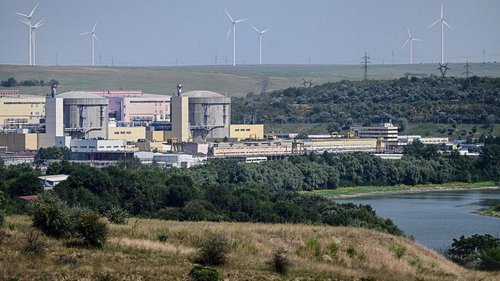
Daewoo is the lead construction consortium for building two 1,000‑megawatt APR1000 reactors, a South‑Korean design, at the Dukovany site. The company stated that it wanted the ministry’s mediation to resume talks and normalize the project as soon as possible.
The core of the disagreement centres on increasing construction costs and the perceived unfairness of requiring Daewoo to absorb additional risk for the first European construction of the APR1000 model. Daewoo argues that, as a contractor, it should not be forced to bear costs that stem from a design model it did not create.
KHNP, on the other hand, said it had ended negotiations after rejecting Daewoo’s revised proposal, citing the company’s failure to adequately reflect the recent rise in construction costs. The operator also indicated plans to launch a new tender for a construction contractor in July 2027, with construction scheduled to begin four months later.
From an environmental perspective, the Dukovany project represents an attempt to modernize an aging nuclear fleet, potentially reducing carbon emissions for the Czech Republic. However, the delay and cost uncertainty raise questions about the economic feasibility of nuclear expansion as a clean‑energy strategy, especially in a region where renewable options are also being pursued.
Industry analysts point to the complex risk calculus that underlies large‑scale nuclear projects. The high upfront costs, coupled with stringent safety regulations and the need for skilled labor, often lead to overruns that strain budgets and investor confidence. In such scenarios, contractors and operators must negotiate acceptable risk‑sharing mechanisms to keep projects viable.
The mediation requested by Daewoo could involve a re‑evaluation of cost allocations, revised timelines, or the introduction of performance‑based contracts that better align incentives between the parties. While no specific mediation framework has been disclosed, the government’s involvement may help restore confidence and keep the project on track for completion.
Ultimately, the dispute underscores the delicate balance between ensuring the safety and reliability of nuclear power, managing construction economics, and pursuing climate‑friendly energy portfolios. The outcome will have implications not only for South Korea’s export of nuclear technology but also for the international quest to secure affordable, low‑carbon power sources.